Carl Jung Archetypes: Psychological Patterns, Core Figures, and the Famous “Twelve”

The phrase Carl Jung archetypes arrives in modern culture with two different jobs. In depth psychology, it points toward psychological archetypes: recurrent patterns in the psyche that organize emotion, fantasy, value, and behavior, often experienced as compelling inner “characters,” dream figures, or cultural images.
In blogs, courses, and brand workshops, “Jungian archetypes” frequently point toward personality archetypes – twelve recognizable story-motifs used to describe how people seek satisfaction and avoid fear.
Both uses overlap, and both drift easily into caricature. A serious introduction should therefore do two things at once: honor what Jung actually attempted to describe, and acknowledge why so many readers arrive asking, plainly, what are the 12 archetypes, and whether that question is even the right container for Jung’s thought.
This article offers a jungian archetypes list in two layers: first, the structural patterns most central to analytical psychology; second, the 12 archetypes as they are commonly packaged online as 12 character archetypes (and sometimes, reductively, as 12 male archetypes in gendered popular lists, archetypal images appear across gender, even when a culture dresses them in masculine or feminine costume). Each item in the twelvefold scheme is sketched briefly, because the deeper work belongs in dedicated essays; one pattern at a time, the way symbol actually enters a life.
What a Jungian archetype is (and is not)
Jung’s archetypes are not a roster of costumes you try on for fun, and not a deterministic “type” system in the sense of a diagnostic label. They are better imagined as deep attractors: organizing tendencies that show up as images, moods, compulsions, ideals, and relational habits. You meet a jungian archetype less like meeting a fact about yourself and more like meeting a grammar your psyche uses when words fail.
Technically, Jung distinguishes the irrepresentable archetype-as-such from its phenomenology: archetypal images and motifs (mother, father, child, trickster, wise elder, hero, and so on). That distinction matters. When someone says, “I am the Rebel,” they are usually narrating a conscious self-story, which may or may not touch the deeper autonomy of an archetypal pattern.
The different types of archetypes people discuss usually fall into three buckets:
- Structural dynamics that Jung and later analysts treat as fundamental to psychic life: persona, shadow, anima, animus, Self.
- Figural motifs that appear cross-culturally in myth and dream: great mother, wise old man, divine child, trickster, hero, puer and senex polarities, and many more.
- Popular twelvefold maps used for story, branding, and coaching, often called jung archetypes in marketing language even when their lineage mixes Jung with narrative theory and modern typology.
If you want types of archetype in one sentence: some names describe where psychic energy habitually flows (toward belonging, mastery, freedom, order), while others describe who shows up in the inner drama (trickster, sage, king).
The collective unconscious in one breath
Jung proposed that beneath personal memory exists a collective layer of psychic life: not a mystical warehouse of facts, but a shared human propensity to generate meaningful patterns. Dreams, myths, religious imagery, and compulsive private fantasies repeatedly converge on similar shapes. That convergence is what motivates the idea of psychological archetypes as more than private invention.
This is why different archetypes can feel “bigger than biography.” They carry collective emotional charge. They also carry risk: the more charged the image, the easier it is to confuse numinosity with truth, or identity with possession.
Layer one: Jung’s core structural archetypes (the spine)
These four (plus Self as horizon) are the backbone most readers need before any personality archetypes list makes sense.
Persona: the face that negotiates society
The persona is the psychic interface: the role, style, and adaptive mask that allows participation in family systems, workplaces, and communities. It is necessary, and it is costly. When the persona becomes total, a person may feel hollow, performative, or obsessively concerned with impression management, because what is missing is contact with the inner person not optimized for public consumption.
Shadow: what the light leaves behind
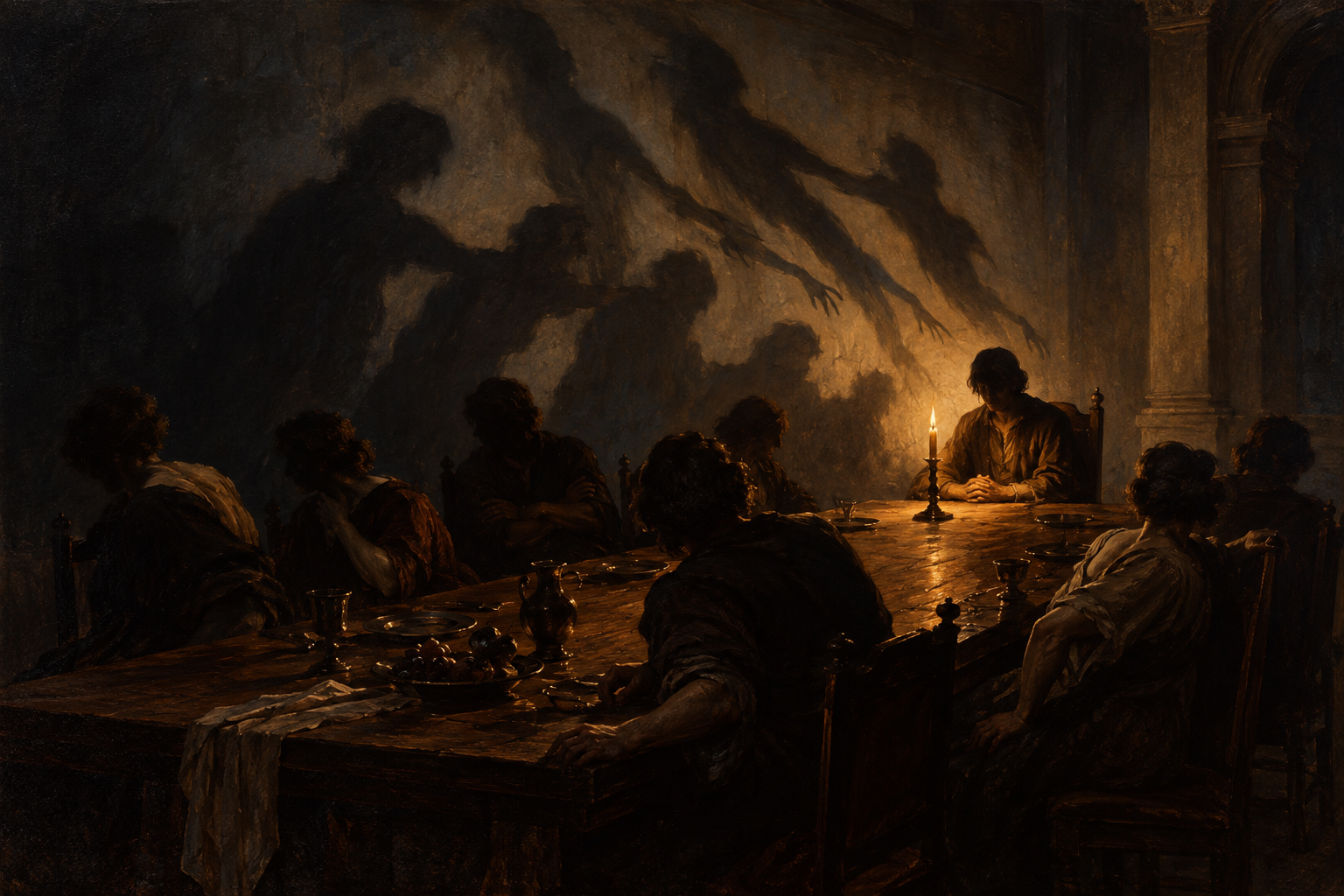
The shadow names traits, desires, resentments, and vulnerabilities excluded from the conscious self-image, often not because they are evil, but because they are inconvenient, shameful, or incompatible with belonging. Shadow is frequently projected: the disliked quality is seen “out there” in an enemy, a rival, a villain, a scapegoat. Shadow work, in a Jungian sense, is not self-esteem theater; it is the slow recovery of psychic wholeness through honest recognition.
Anima and animus: contrasexual interiority (and more than gender)
Anima and animus are Jung’s terms for contrasexual psychic factors – inner patterns that carry otherness, eros, judgment, word, idealization, inspiration, and trouble. Contemporary readers rightly ask for nuance: these are not literal “man inside woman / woman inside man” dolls; they are symbolic languages for how the psyche balances one-sidedness, often through fascination, conflict, and creative fantasy.
Self: the ordering center (not “the ego on a good day”)
The Self (often capitalized in Jungian writing) points toward the psyche’s drive toward wholeness and organization across conscious and unconscious life. It appears in dreams as mandalas, doubling, reconciling symbols, numinous guides, or paradoxical images. It is easy to sentimentalize; analytically, it is better treated as a lifelong perspective than a trophy state.
Together, these structures explain why jungian archetypes cannot be reduced to a pick-a-card personality game without losing their clinical seriousness: they describe relations within a psyche, not only traits.
Layer two: common figural motifs (a sampler of “more than twelve”)
Beyond the core structure, Jung’s writings and case material swarm with archetypes as figures. A short sampler, each could sustain its own long essay:
- Mother and Father as archetypal poles (nurture, containment, law, judgment, inheritance).
- Child motifs: vulnerability, renewal, potential, wounded innocence, the “divine child” as promise.
- Hero movement: striving, ordeal, inflation, sacrifice, identification with triumph.
- Wise old man / wise woman: insight, severity, moral spellbinding, interior mentor, sometimes helpful, sometimes deadening as dogma.
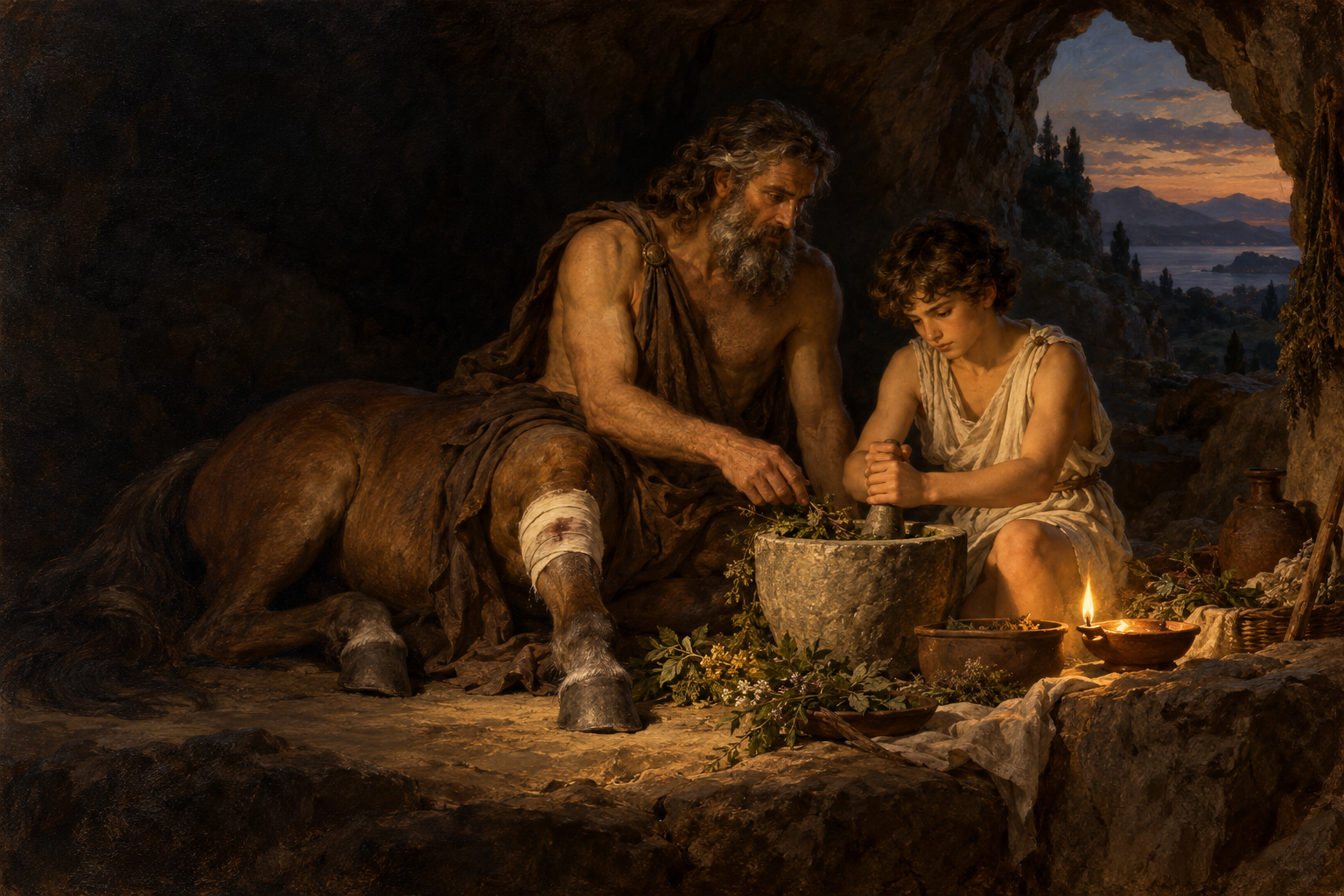
- Wounded healer: the helper’s own hurt as both instrument and risk, and the split that turns help into rescuing.
- Trickster: disorder that rearranges order; shame and laughter bound together; the psyche’s refusal to behave.
- Puer (eternal youth) and senex (old authority): time, limit, flight, cynicism, initiation.
This sampler is already more than twelve, and it is still incomplete. So when the internet promises a neat jungian archetypes list of twelve, what it usually promises is pedagogy, not exhaustiveness.
Layer three: what people mean by “the 12 archetypes”
Here is the honest answer to what are the 12 archetypes, as the phrase is used in most articles aimed at general readers.
Many contemporary lists, including widely shared leadership posts, present the 12 archetypes as a menu of motivational stories: Innocent, Everyman, Hero, Caregiver, Explorer, Rebel, Lover, Creator, Jester, Sage, Magician, Ruler. A representative popular layout appears in pieces such as Conor Neill’s overview, which frames them as personality archetypes with desires, fears, and talents.
These 12 character archetypes can be useful as shared vocabulary for fiction, marketing, and self-reflection. They are also routinely mislabeled as “pure Jung,” when their modern popularity owes much to how twentieth-century narrative psychology translated mythic language into manageable types. Academic summaries and research primers, such as EBSCO’s entry on Jungian archetypes and the collective unconscious, often emphasize Jung’s theoretical core rather than a fixed twelvefold roster; practical introductions like PositivePsychology.com’s Jungian archetypes page tend to bridge theory with applied self-knowledge.
Depths of You gains authority by stating plainly: 12 jungian archetypes is a search term that bundles Jung’s depth psychology together with later popular synthesis. The synthesis can still be valuable, if you know what it is.
Layer two: common figural motifs (why “more than twelve” is the norm)
If the first layer names how the psyche organizes itself, persona as interface, shadow as excluded life, anima and animus as contrasexual and contrapersonal complexity, Self as the drive toward wholeness, then this second layer names who keeps showing up when those structures speak. These are the figural motifs Jung and later analytical psychologists track through myth, fairy tale, religious iconography, and dream: not “characters” borrowed from entertainment, but recurrent psychic images that carry emotional charge, ethical pressure, and the strange autonomy of the objective psyche.
Here the language of archetypes becomes unavoidably plural. A single person may live one conscious story, “I am reasonable,” “I am independent,” “I am helpful”, while dreams and moods stage an entire court: a devouring presence, a stern judge, a laughing saboteur, a child who must be protected, a wise figure who offers a key. That multiplicity is why any tidy twelve-type map can serve as an introduction yet still under-describe lived depth. The figures below are not exhaustive; they are high-frequency visitors in Jungian description, each worth a future essay because each can appear as guide, trap, or both.
The Great Mother (nurturing and terrible)
The maternal archetype is among the most powerful organizers of fantasy because it touches the earliest strata of dependence, safety, and survival. In its positive aspect, it appears as containment, warmth, food, rest, forgiveness, the feeling that one is held within something larger than personal effort. In dreams it may be a garden, a sea, a temple, an animal with soft strength, a woman who knows what to do without being told.
In its negative or “terrible” aspect, the same motif turns toward devouring closeness, suffocation, guilt, emotional blackmail, the swamp that comforts and swallows, the love that cannot tolerate separateness. This is not a comment on real mothers; it is a comment on psychic facts that real mothers can be drafted into, and that children and adults re-stage internally when attachment and autonomy collide.
The developmental psychological issue is almost always differentiation: whether life-giving containment can coexist with the permission to leave, to err, to become an individual. When the Great Mother dominates unconsciously, a person may oscillate between craving care and fleeing it, idealizing women and resenting them, or seeking partners who recreate an ancient emotional climate. Consciously integrating this motif means learning to receive nurture without returning to infancy, and to refuse fusion without hardening into contempt.
The Father (law, limit, legitimacy, and the sword)
The paternal pattern is not merely “authority figures.” It organizes law, order, naming, tradition, trial, and the ethics of consequence. The positive father-image supports backbone: the sense that limits can protect, that words mean something, that one can bear difficulty without disintegration, that initiation is possible. In dreams it may appear as a king, a craftsman, a teacher, a stern man who nonetheless recognizes effort, a mountain, a bright sky.
The negative father-image is the tyrant, the critic, the frozen judge, the internal voice that permits no weakness, the institution that demands obedience while offering no guidance, the god who loves only performance. This shadow is not “fathers are bad”; it is the pattern by which power replaces paternity, when limit becomes humiliation, when discipline becomes contempt, when legitimacy becomes domination.
Many contemporary struggles with ambition, shame, and authority are, at depth, negotiations with this motif: whether one can internalize law-with-mercy, whether one can submit to necessity without worshipping cruelty, whether one can rebel without becoming permanently oppositional. The father-pattern also intersects the Hero: the child who must leave home, pass ordeal, and return with something earned.
The Child: divine, wounded, and the puer puzzle
Child figures arrive in depth psychology with several distinct accents, and conflating them creates confusion.
The divine child carries newness, potential, futurity, the fragile promise that something not yet formed still deserves protection. It can appear as an infant in a dream, a foundling, a radiant boy or girl, a small animal, a seed. Psychologically it often signals an emerging possibility in the personality, tenderness returning after burnout, creativity after cynicism, something that must not be rushed or shamed into “maturity” too fast.
The wounded child carries memory, need, and unmet dependency; it is less about promise than about grief. It may appear as a lost kid, a sick child, a figure hiding, a memory-body state. This motif is easily exploited by pop psychology if it becomes an excuse; in Jungian usage it is more often an accurate description of psychic pain that still requires adult consciousness to hold.
The puer aeternus (“eternal youth”) names a child-related complex more specific than “immaturity”: a psyche addicted to openness, possibility, flight, charm, and the avoidance of limit. It can look like creativity and charisma; it can also look like inconsistency, refusal of commitment, romanticized despair, the endless beginning. The puer’s classical counter-pole is the senex (old man), not merely as villain but as time, structure, mortality, and the demand to finish.
Understanding child motifs matters because modern life often worships youth while secretly fearing dependency, producing adults who oscillate between controlling others and feeling helplessly small.
The Hero: ordeal, inflation, and the difference between strength and armor
The Hero as figural motif overlaps the “Hero” of popular twelve-type systems, but in depth psychology the emphasis falls less on motivational branding and more on movement through ordeal, and on the Hero’s chronic occupational hazard: inflation.
The Hero image gathers courage, sacrifice, discipline, the willingness to enter the forest anyway. It also gathers grandiosity, martyrdom, the compulsion to be the exception, the secret belief that vulnerability is for other people. Dreams of war, pursuit, impossible tasks, or rescuing others may track Hero energy, sometimes as genuine calling, sometimes as a defense against interior powerlessness.
A mature reading asks whether the Hero serves individuation (becoming more whole) or merely persona maintenance (becoming more admirable). The difference shows up relationally: does strength create space for others, or does it demand an audience? Does courage include the heroics of apology and dependency, or only the heroics of control?
The Wise Old Man / Wise Woman: insight, spellbinding, and the ethics of wisdom
These figures condense knowledge, perspective, and the cold clarity that can cut through illusion. They appear as mentors, wizards, crones, monks, physicians, librarians, strangers with one sentence that rearranges a life.
Their light face is genuine guidance: timing, patience, the map that is not a cage. Their dark face is spellbinding knowledge, the intellect or charisma that overmasters another’s agency, the “wise” person who needs disciples, the inner voice that uses insight as a whip. Jung’s treatment of archetypal wisdom figures is never purely cozy: wisdom can freeze as dogma, especially when it becomes a defense against feeling.
In gendered guise, “wise old man” and “wise woman” also connect to animus and anima imagery: not as romantic objects only, but as interior otherness that brings discrimination (often harsh) and symbolic speech. This is why such figures appear at thresholds, when a life must change and the ego’s usual tools are insufficient.
The Trickster: disorder that rearranges order

The trickster is not simply “the funny one.” As myth repeatedly insists, this figure is obscene, hungry, dishonest, clumsy, lucky, destructive, and occasionally salvific, often in grotesque combinations. Psychologically, trickster energy appears when a one-sided conscious stance requires humiliation, surprise, or reversal: the dream that mocks your dignity, the slip of the tongue that reveals truth, the impulse to sabotage precisely what you claim to want.
Because trickster motifs violate decorum, they are easy to moralize away. Jung’s interest is different: trickster-like images can signal compensation and renewal, the psyche’s refusal to be governed by a rigid superego or a sentimental self-image. The ethical problem is real: trickster energy can liberate and can also harm. Depth psychology does not romanticize cruelty; it asks what function the disruption serves, and whether the ego can learn without being crushed.
Personified Shadow: the enemy who carries your missing life
Shadow is both structure (layer one) and figure (layer two). As a figure, the shadow may appear as a pursuer, a criminal, a rival, a disgusting stranger, a hated political face, a monster with oddly familiar eyes. The dream does not hand you a moral verdict; it hands you an image of what you do not allow yourself to be, sometimes rightly (the shadow contains genuinely unacceptable impulses) and sometimes wrongly (the shadow contains gifts mistaken as shameful: anger that could defend boundaries, desire that could enliven, ambition that could save).
Working with shadow figures is not “become your worst impulse.” It is differentiate: recognize projection, withdraw blame where it belongs inward, and convert raw energy into considered choice. The moment shadow becomes entirely conscious, it ceases to appear as a devil and becomes a problem of ethics and relationship, harder, but more human.
Anima and animus as inner counter-voices (beyond romance)
Although anima and animus belong to structural description, they also appear as specific faces: the unknown woman in dreams, the stern man with a book, the seductive image, the judge, the artist, the enemy-lover. These figures carry eros and word, inspiration and dispute, the psyche’s other pole.
Popular writing collapses anima/animus into dating advice; Jungian usage is broader. An animus figure may berate you with standards; an anima figure may lure you toward beauty or chaos. The task is not to “integrate” them as a trophy romance, but to dialogue without possession: to become capable of interior conversation, so outer relationships are less compulsively recruited to solve inner unfinished business.
Royalty and marriage motifs: Self-hints in symbolic costume
Kings, queens, crowns, weddings, castles, and royal children appear frequently because they dramatize sovereignty and union of opposites, psychic events that ordinary language struggles to name. A king in a dream may be the Self-image of ordering center, or a tyrant image of inflated ego, or a father-law complex wearing royal clothes. A royal marriage may image reconciliation of masculine and feminine principles within, not as gender prescription, but as symbolic grammar.
These motifs are easily misread literally (“I should marry someone powerful”), which is why Jungians emphasize amplification and context: the feeling-tone of the dream, the day-world situation, the recurring life problem.
Death, the underworld, and threshold figures
Skeletons, dark rivers, graves, guides to the underworld, and faceless watchers are not merely “negative symbols.” They often belong to transformation narratives: old identity dying so a more truthful life can exist. Death motifs can also signal depression or trauma states; discrimination is clinical as well as symbolic. Depth psychology refuses to turn every nightmare into spirituality, yet it also refuses to pretend nightmares mean nothing.
Such figures become intelligible when seen as psychic realism: some changes require grief, some growth requires descent, some illusions must end.
Animals, daimons, and the multiplicity of the objective psyche
Jungian work pays attention to animals in dreams because they often carry instinctive wisdom the ego underestimates: snake as renewal and poison, lion as rage and courage, bird as spirit and escape, dog as loyalty and shame, wolf as pack and outlaw hunger. The specific animal matters less than the cluster of associations the dreamer’s psyche activates, personal and cultural.
Likewise, “daimonic” possession (in a descriptive, not diagnostic, sense) is a way depth psychologists speak about autonomous complexes: states where a person speaks “like themselves” yet is not fully themselves, rage without proportion, devotion without judgment, panic without present danger. Figural motifs help name what has seized the helm.
The popular twelve can be a map for motivation and story. The figural layer is the map for dreams, symptoms, relationship repetitions, creative obsessions, and the sense that life is being moved by something larger than intention. When someone asks for types of archetypes, one honest answer is that Jung’s world includes structures and figures, processes (individuation) and images (mother, trickster, child), and that the psyche’s vocabulary is naturally more than twelve because human inner life is not a corporate branding deck.
Depth is not additive trivia. It is the recognition that inner images have consequences: they steer attention, justify decisions, generate chemistry, and sometimes save a life by breaking a pattern that reason could not touch.
1) Innocent archetype
The Innocent organizes life around the hope that goodness can be simple: that if one is sincere, careful, or pure enough, the world will respond with protection, restoration, or forgiveness. Psychologically, this pattern often defends against disillusionment by preserving a core fantasy of unbroken order, a psyche that cannot yet bear, or refuses to bear, how much of human reality is mixed motive and mixed outcome. In its mature form, the Innocent carries renewal: the capacity to begin again without cynicism, to trust carefully where trust has been earned, to recognize small mercies without demanding a perfect world. In its compulsive form, it becomes moral anesthesia: denial dressed as optimism, compliance dressed as virtue, a frightened refusal to read the room. Relationally, the Innocent can inspire tenderness and can also provoke cruelty in others, not because innocence deserves harm, but because unconscious shadow often attacks what it cannot tolerate as “weak.” The developmental question here is not “grow up and lose goodness,” but whether innocence can mature into discriminating hope: warmth without naivete, faith without self-deception.
2) Everyman / Everyperson archetype
The Everyperson seeks belonging through reciprocity and shared ground: the dignity of the ordinary, the relief of not being special, the ethics of showing up. This pattern often forms in psyches that associate survival with fitting in, where standing out felt like danger, ingratitude, or exile. Its gift is solidarity: realism, humor that binds, loyalty without performance, the sense that nobody should have to carry life alone. Its shadow is self-erasure: chronic accommodation, resentment simmering beneath agreeableness, a subtle refusal to individuate because individuation feels like betrayal of the tribe. In groups, the Everyperson can be the glue, and can also be the one who later collapses or explodes, surprising everyone, because “being easy” was never the same as being free. The inner work is not to become exceptional for its own sake, but to recover voice without contempt for the common life: to belong and still be someone.
3) Hero archetype

The Hero pattern is fueled by the need to prove worth through trial: courage as currency, competence as moral evidence, struggle as the only trustworthy path to self-respect. It often emerges where love felt conditional on performance, or where danger made passivity impossible. The Hero concentrates discipline, sacrifice, and protective strength; it can carry genuine nobility, the willingness to bear cost so others do not have to. Its shadow is perpetual warfare: an identity that requires enemies, emergencies, and ladders; burnout mistaken for virtue; tenderness experienced as a threat to armor. Relationally, the Hero can inspire and can also exhaust, because intimacy asks for vulnerability, and the Hero psyche sometimes hears vulnerability as defeat. A mature Hero learns that the final trial is often not conquest but surrender: strength without grandiosity, responsibility without the compulsion to be the only adult in the room.
4) Caregiver archetype
The Caregiver organizes meaning around keeping others alive, physically, emotionally, or spiritually. Its ethics are proximity: responsiveness, nurture, stabilization, the work of tending what is fragile. This pattern frequently develops where early environments rewarded sensitivity, punished selfishness, or demanded premature maturity. Its gift is genuine mercy: the ability to soothe, repair, feed, witness, and stay. Its shadow is covert contract: care as control, guilt as leverage, martyrdom as power, resentment that cannot speak because it would shatter the self-image of goodness. The Caregiver’s tragedy is not kindness itself but unbounded responsibility, the inability to tolerate another person’s suffering without owning it as failure. Individuation here asks for boundaries that feel like betrayal but function as love: help that does not consume the helper.
5) Explorer archetype
The Explorer is moved by the intuition that authenticity is not a state but a direction: the psyche must widen, new places, new ideas, new identities, because confinement feels like spiritual death. This pattern often compensates a fear of emptiness: the dread that a settled life will reveal an inner void. Its gift is awakening: curiosity, courage to leave, refusal to worship dead forms, the willingness to become a beginner again. Its shadow is flight: restlessness as avoidance, novelty as anesthesia, chronic departure that prevents depth from forming because depth requires staying long enough to be transformed by friction. Relationally, the Explorer can enliven others and can also leave wounds shaped like abandonment, sometimes not from cruelty but from terror of being caged by love. Maturity is not the end of exploration but the discovery that the farthest journey may be inward, without using “inward” as a cage either.
6) Rebel / Outlaw archetype
The Rebel pattern identifies truth with rupture: what is rotten must be named, broken, or refused, even at cost. It often forms where authority proved hypocritical, where obedience meant self-betrayal, or where survival required a sharp no. Its gift is clear sight: the courage to challenge illegitimate power, the refusal to normalize harm, the creative destruction of conventions that have outlived their humanity. Its shadow is oppositional identity: a self that must have an enemy, a chaos that mistakes itself for freedom, a contempt that cannot build because building looks like compromise. Relationally, Rebels can be liberators and can also recreate domination in reverse, controlling others through intimidation, cynicism, or the moral high ground of perpetual outrage. The developmental edge is to become a Rebel who can also create: protest that turns into structure, freedom that does not require a scapegoat.
7) Lover archetype

The Lover seeks bond, with persons, beauty, bodies, art, world, through warmth, attraction, devotion, and sensory participation in life. This is not merely romance; it is the archetypal insistence that meaning is relational and erotic in the broad sense: touched, tasted, chosen, cherished. The Lover’s gift is vivification: color returns to gray days; life feels inhabited rather than managed. Its shadow is merging and hunger: jealousy as theology, craving as identity, self-worth borrowed from being chosen, boundaries experienced as rejection rather than health. Where the Lover is wounded, charm can become manipulation, seduction can become a test, intimacy can become a battlefield disguised as passion. Maturity asks whether love can include separateness, two centers meeting, rather than one center dissolving into another.
8) Creator / Artist archetype
The Creator pattern experiences psyche as making: truth must take form, words, images, systems, crafts, because inner pressure demands incarnation. It often appears where early life rewarded originality or punished ordinariness, and also where suffering demanded translation into meaning. Its gift is novelty-with-integrity: the courage to birth something that did not exist, to endure the awkward phase where the work is ugly, to serve vision rather than applause. Its shadow is torment disguised as taste: perfectionism, envy, narcissism of sensitivity, private superiority, the refusal to finish because finishing exposes one to judgment. Relationally, Creators can inspire and can also isolate, because the work can become a rival to people. The edge is not “be less serious,” but whether creation can be dialogical: offered without demanding worship, revised without self-annihilation.
9) Jester archetype

The Jester lives close to play as intelligence: irony, timing, surprise, the relief of laughter, the social permission to say what cannot be said straight. Psychologically, humor can be a form of truth-telling that bypasses shame, or a form of evasion that bypasses contact. The Jester’s gift is proportion: the return of humility, the puncturing of pomposity, the communal medicine of joy. Its shadow is the weapon-joke: humiliation dressed as wit, contempt dressed as honesty, the refusal to stay present with pain except as material. Relationally, the Jester can heal tension and can also train others never to risk sincerity, because sincerity becomes a setup. Maturity is wit that can soften as well as cut: play that serves relationship, not only relief for the joker.
10) Sage archetype
The Sage seeks coherent understanding: maps, principles, discernment, the reduction of chaos to pattern, without necessarily needing to win socially. This pattern often strengthens where uncertainty felt dangerous, where thinking became refuge, or where early life rewarded being “the smart one.” Its gift is clarity: perspective, patience with complexity, the ability to name what is happening without drowning in it. Its shadow is coldness and control-through-knowledge: analysis as defense, contempt for feeling, intellectual pride, the secret pleasure of being unfooled, even at the cost of compassion. Relationally, the Sage can guide and can also distance, because intimacy asks for mess, and mess threatens the Sage’s self-image as composed. Maturity is wisdom that remains human: insight that can hold mystery without using mystery as an escape from responsibility.
11) Magician / Wizard archetype
The Magician names the psyche’s hunger for transformation at the root: not incremental adjustment but shift of paradigm, healing, initiation, reversal of fate, the hidden lever that changes everything. It appears in healers, therapists, coaches, innovators, charismatic teachers, and in their impostors. Its gift is metanoia: the art of turning poison into medicine (sometimes literally, often symbolically), the craft of timing, ritual, language, and presence that helps a psyche reorganize. Its shadow is manipulation and inflation: the magician who needs disciples, the leader who confuses charisma with truth, the promise of instant change that bypasses griefwork. Relationally, Magician energy can be profoundly trustworthy or profoundly dangerous, because it works at depth, where suggestion and projection run hot. Maturity is transformation without theft of agency: power offered as invitation, not spellbound dependence.
12) Ruler archetype
The Ruler organizes life around order, sovereignty, and responsibility for the whole: the terror of chaos, the calling to stabilize, the burden of deciding. This pattern often forms where someone had to be adult early, where collapse was not permitted, or where love was tied to competence and protection. Its gift is integration at scale: boundaries, standards, stewardship, the courage to hold tension without dumping it downward. Its shadow is domination: control addiction, shame-management through command, contempt for dependency, the inability to tolerate dissent without feeling existentially threatened. Relationally, Rulers can provide safety and can also shrink others, not always from cruelty but from fear that any looseness invites disaster. Maturity is authority as service: power that can share power, order that leaves room for soul.
Conclusion
Popular writing sometimes packages the familiar twelve patterns as 12 male archetypes, usually as a storytelling or self-help shorthand. Mythic language is often costumed in masculine or feminine forms, but the underlying movements – toward belonging, mastery, freedom, order, union, rupture, play, insight, transformation – are human pressures, not properties of a single gender.
The more useful question is not which box fits a body, but which pattern is exerting a claim right now is which desire is being obeyed, which fear is steering avoidance, and which compensatory figure appears when a life becomes too narrow, too heroic, too innocent, or too controlled.
Typologies, including the well-known twelve, can be used honestly, as starting coordinates. They fail when they become a substitute for biography. A public Sage can carry a private Rebel shadow; a Creator’s drive can be secretly mortgaged to a Caregiver wound; a Magician’s charisma can defend against Everyman shame. Archetypal psychology is interested in these crossed currents because they describe how the psyche protects itself while it also tries to grow.
Individuation is not a rapid-inventory project. It is a long work of attention: dreams that return until they are heard, relationships that repeat until they are understood, ideals that punish until they are revised. The figures and patterns gathered under Carl Jung archetypes are best treated as living language – a way to speak about inner multiplicity without pretending it can be settled in a single afternoon.
What remains after the map is the journey that maps cannot complete: to become more truthful than one’s favorite self-story, more compassionate than one’s harshest inner verdict, and more conscious of the images that move you, so that when they move you, you can recognize the hand.