75 Deep Carl Jung Quotes That Will Change How You See Yourself

If you are searching for Carl Jung quotes, you have likely noticed a problem. Most results are surface-level listicles that strip his words of their power, reducing complex Jungian psychology to simple motivational captions.
But Carl Gustav Jung was not a self-help guru. He was the founder of analytical psychology and a explorer of the human psyche. His work focused on the difficult, often terrifying process of Individuation (becoming who you truly are) and the necessity of confronting the Unconscious.
In this guide, we go beyond the soundbites. We have compiled 75 of the most profound Jung quotes on the Shadow, the Self, and the nature of reality. Unlike other collections, we provide the psychological context for each quote and have verified the sources against the Collected Works to ensure accuracy.
Here is your roadmap to understanding the depths of Jungian theory through his own words.
Part I: The Shadow & Evil (Integration, Projection, and the Monster Within)

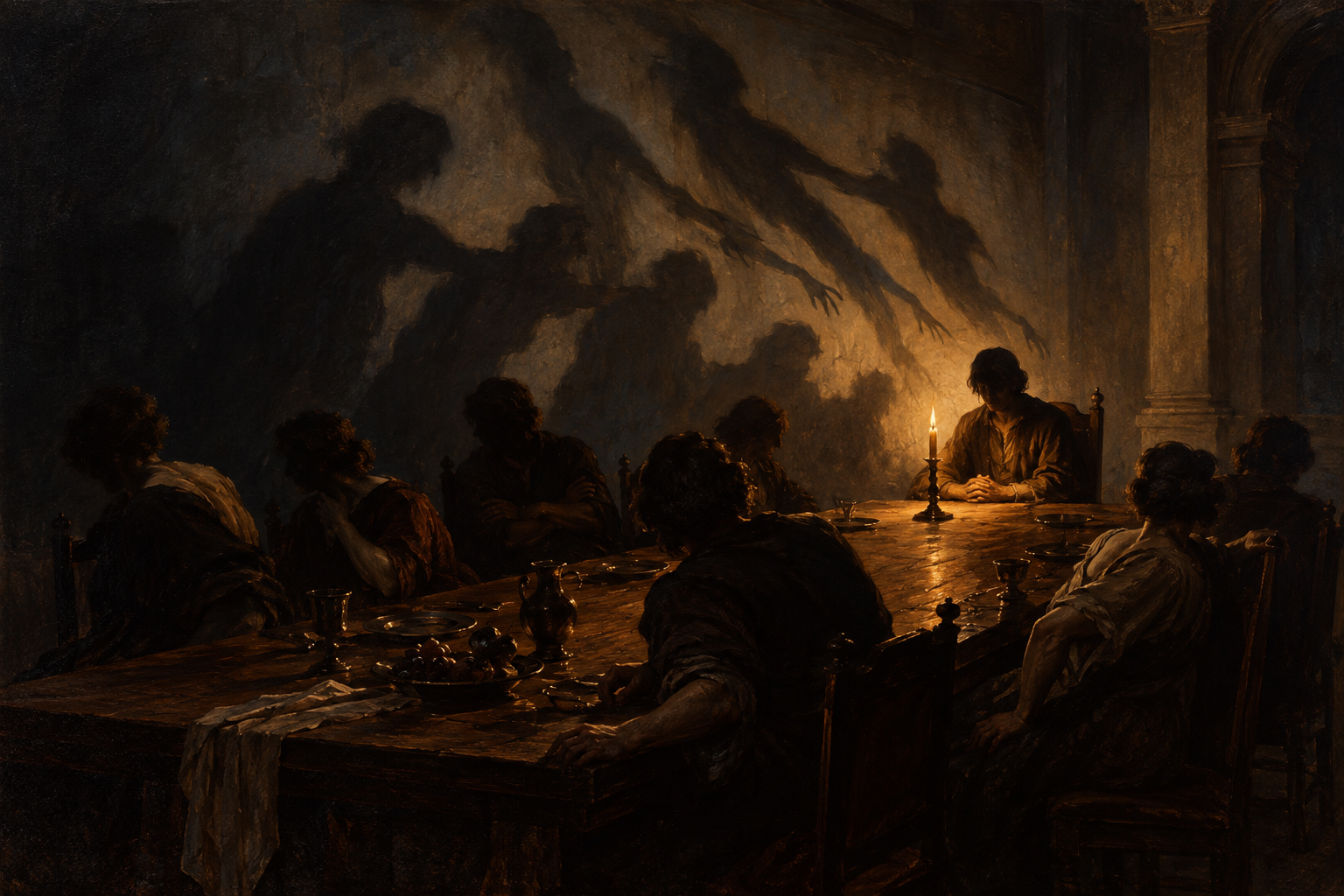
The Jungian Shadow is the most widely searched concept in depth psychology, yet it is often misunderstood as merely “negative thoughts.” In reality, the Shadow consists of everything the conscious Ego has rejected, repressed, or ignored. This includes aggression and taboo desires, but also the “Gold in the Shadow” (untapped creativity).
To do Shadow Work is to make the unconscious conscious. As these Shadow quotes reveal, you cannot be whole until you face the darkness within.
1. On True Enlightenment
“One does not become enlightened by imagining figures of light, but by making the darkness conscious.”
Source: Collected Works, Vol. 13: Alchemical Studies, par. 335
The Breakdown: Modern spirituality often chases “love and light,” encouraging people to visualize positive outcomes while ignoring negative emotions. Jung argues this is a form of spiritual bypassing. Jung argues this is a form of spiritual bypassing, and it is the most common reason shadow work fails, because the ego learns the vocabulary of the descent while refusing to make it.
True enlightenment is a descent, not an ascent. It requires the courage to engage in Shadow integration by looking at your own jealousy, pettiness, and shame. Only when you drag these repressed parts into the light of consciousness do they lose their power over you.
2. On Fate vs. Psychology
“The psychological rule says that when an inner situation is not made conscious, it happens outside, as fate.”
Source: Collected Works, Vol. 9ii: Aion, par. 126
The Breakdown: This is the psychological mechanism behind “bad luck”, and the same mechanism sits underneath the shadow’s role in self-sabotage, where the thing you say you want collapses at the last moment. If you refuse to acknowledge your own inner conflict (such as repressed aggression), you will unknowingly project it onto the world. You might attract aggressive partners or find yourself in constant conflict. Jung suggests that the world acts as a mirror for your unconscious mind. Until you resolve the internal issue, the external world will force you to face it as “fate.”
3. On the Density of the Shadow
“Everyone carries a shadow, and the less it is embodied in the individual’s conscious life, the blacker and denser it is.”
Source: Collected Works, Vol. 11: Psychology and Religion, par. 131
The Breakdown: The Shadow operates on a hydraulic principle: the harder you repress it, the stronger it pushes back. A person who insists they are “100% nice” often possesses the darkest, most destructive Shadow. Because they have dissociated from their capacity for human aggression, it operates autonomously. This often leads to sudden outbursts or moral failures. To “embody” the shadow means to accept that you are capable of terrible things, which paradoxically gives you the control not to do them.
4. On Wholeness vs. Goodness
“I’d rather be whole than good.”
Source: Memories, Dreams, Reflections
The Breakdown: Society conditions us to be “good” (compliant, polite, predictable). The Soul demands we be “whole.” In Jungian analysis, these two goals often conflict. Being “good” usually requires slicing off large parts of your personality that society deems unacceptable. Being “whole” means reclaiming those parts. A whole person has a capacity for selfishness but uses it for self-preservation. Goodness is a social construct; wholeness is a psychic necessity.
5. On the Roots of Humanity
“No tree, it is said, can grow to heaven unless its roots reach down to hell.”
Source: Collected Works, Vol. 9ii: Aion, par. 78
The Breakdown: This metaphor illustrates the necessity of grounding. Spiritual or intellectual growth (the branches reaching to heaven) is unsustainable without a connection to the instinctual, primal aspects of life (the roots in hell). A person who tries to live purely in the intellect becomes neurotic. To stand tall, you must be anchored in the reality of your own human nature.
6. On Empathy and Judgment
“Knowing your own darkness is the best method for dealing with the darknesses of other people.”
Source: The Vision Seminars
The Breakdown: When you are unaware of your own shadow, you judge others constantly. You see their flaws as moral failures rather than psychological symptoms. But when you have confronted your own inner demons through self-reflection, you recognize them in others. Your judgment is replaced by understanding. You realize that the criminal or the tyrant acts out impulses that exist within you, too. This is the foundation of genuine compassion.
7. On the Primitive Within
“Taking it in its deepest sense, the shadow is the invisible saurian tail that man still drags behind him.”
Source: The Integration of the Personality
The Breakdown: Jung often reminded us that we are not just modern, civilized humans; we are also ancient mammals. We have an evolutionary history encoded in our brains. The “saurian tail” represents our reptilian instincts (territoriality, survival aggression). We try to hide this tail with polite behavior, but it is always there. To integrate the shadow is to acknowledge this ancient creature within so that it walks beside you rather than dragging you behind it.
8. On Collective Madness
“It is a frightening thought that man also has a shadow side to him, consisting not just of little weaknesses and foibles, but of a positively demonic dynamism.”
Source: Collected Works, Vol. 7: Two Essays on Analytical Psychology, par. 35
The Breakdown: Here Jung distinguishes between the “personal shadow” and the archetypal shadow (absolute evil). When a group of people projects their shadow collectively (as seen in war or mob violence), they are possessed by this “demonic dynamism.” We traced how the collective shadow forms around a single figure in our analysis of the Epstein case, where an entire social class kept its own darkness at a comfortable distance. They feel righteous while committing atrocities. This quote reminds us that psychology is not just self-help; it is a safeguard against becoming a pawn in collective evil.
9. On The Cost of Consciousness
“There is no coming to consciousness without pain.”
Source: Collected Works, Vol. 17: The Development of Personality, par. 293
The Breakdown: Ignorance is bliss; consciousness is painful. It hurts to admit you were wrong, or that your “noble sacrifice” was actually a manipulation. Many people avoid depth psychology because they simply do not want to feel this pain. But Jung argues that this pain is the “growing pain” of the soul. Without it, you remain a child psychologically.
10. On Self-Acceptance
“The most terrifying thing is to accept oneself completely.”
Source: (Attributed widely, aligns with Seminar on Zarathustra)
The Breakdown: We crave acceptance from others, yet we refuse to give it to ourselves. We edit our self-image, cropping out the ugly parts. To accept oneself completely is the ultimate act of courage. It means looking in the mirror and acknowledging both the saint and the sinner. This acceptance is the “narrow gate” to mental health and genuine peace.
11. On the Danger of Good Intentions
“Every form of addiction is bad, no matter whether the narcotic be alcohol, morphine, or idealism.”
Source: Memories, Dreams, Reflections
The Breakdown: We usually associate the Shadow with vices like drugs. But Jung warns that “light” things can cast a shadow too. You can be addicted to political idealism, religious purity, or “saving the world.” When you are possessed by an ideal, you lose your humanity and start justifying cruel means for a “noble” end. This is the Shadow hiding behind virtue.
12. On Avoiding the Soul
“People will do anything, no matter how absurd, to avoid facing their own souls.”
Source: Psychology and Alchemy, par. 126
The Breakdown: We live in an age of distraction. We scroll, consume, and obsess over external events. Jung suggests these are not just habits; they are defense mechanisms. Silence is terrifying because in silence, the Soul speaks. And the Soul often asks questions we do not want to answer. We fill the silence with noise to avoid the confrontation.
Part II: Individuation & The Self (The Hero’s Journey)

If the Shadow is the filth we must wade through, Individuation is the destination. This is the central concept of Jungian analysis. It describes the lifelong process of distinguishing the unique Self from the collective psychology of the masses.
Individuation is not about becoming “normal” or “well-adjusted.” It is about stripping away the layers of parental and societal expectations to reveal the unique core of who you are. As these quotes illustrate, the journey from the Ego to the Self is the ultimate hero’s journey.
13. On the Goal of Life
“The privilege of a lifetime is to become who you truly are.”
Source: Memories, Dreams, Reflections (Paraphrased from the concept of the ‘Masterpiece of the Self’)
The Breakdown: While this quote is often plastered on gym walls, the psychological reality is much heavier. To “become who you truly are” is an act of rebellion, and Nietzsche issued the same command from a different direction decades earlier. It requires you to disappoint the expectations of your parents, your peers, and your culture. We are born as raw potential, but we are quickly shaped by external forces. Individuation is the privilege of reclaiming that original potential. Many people live and die without ever meeting their true selves, remaining merely a reflection of their environment.
14. On Agency and Victimhood
“I am not what happened to me, I am what I choose to become.”
Source: Collected Works, Vol. 16: The Practice of Psychotherapy (Contextual summary)
The Breakdown: This is the antidote to determinism. In clinical psychology, it is easy to view a patient purely as a result of their trauma: “I am this way because my childhood was hard.” Jung acknowledged the immense power of the past, but he refused to let it define the future. The neurosis you suffer from is often a result of getting stuck in “what happened.” Healing begins when you assert the agency of the present moment. You acknowledge the wound, but you refuse to let the wound be your identity.
15. On the Danger of the Mob
“Resistance to the organized mass can be effected only by the man who is as well organized in his individuality as the mass itself.”
Source: The Undiscovered Self (1957)
The Breakdown: Jung wrote heavily about the dangers of the “mass mind” or mob psychology, especially after witnessing the rise of fascism in Europe. He believed that the only defense against tyranny (political or cultural) is the true individual. If you do not know who you are, you are easily swept up in collective movements, trends, and hysterical outbursts. Individuation is not just a personal therapy; it is a political act. By organizing your own psyche, you become immune to the infection of the herd.
16. On the Trap of “Normalcy”
“The shoe that fits one person pinches another; there is no recipe for living that suits all cases.”
Source: Modern Man in Search of a Soul
The Breakdown: This quote attacks the cookie-cutter advice we see everywhere. There is no single “right way” to live. What acts as medicine for one psyche may be poison for another. A rigid moral code or a specific lifestyle blueprint often fails because it ignores the unique contours of the individual soul. Jung urges us to stop looking for a universal rulebook and start listening to the specific demands of our own nature.
17. On the Two Halves of Life
“We cannot live the afternoon of life according to the program of life’s morning, for what was great in the morning will be little at evening and what in the morning was true, will at evening have become a lie.”
Source: Collected Works, Vol. 8: The Structure and Dynamics of the Psyche, par. 784
The Breakdown: Jung is the father of the “midlife crisis.” He taught that the first half of life is for building a healthy Ego: getting a career, a family, and social standing. But if you try to keep playing that game in the second half (the afternoon), you will become neurotic. The second half of life requires a shift inward, toward meaning, legacy, and the Self. Clinging to youth or status in your later years is a violation of the psyche’s natural rhythm.
18. On Neurosis as Meaninglessness
“About one-third of my cases are suffering from no clinically definable neurosis, but from the senselessness and emptiness of their lives.”
Source: Modern Man in Search of a Soul
The Breakdown: Depression is not always a chemical imbalance; sometimes it is a “spiritual problem.” We live in a society rich in material goods but bankrupt in meaning. When a person has food, shelter, and security but still feels empty, the soul is asking for purpose. That is the condition we examined in why achievement leaves high performers empty, where every external goal is met and the reward never arrives. Jung argues that you cannot cure this with pills or simple coping mechanisms. The only cure is finding a myth or a meaning that makes your life worth living.
19. On The Difficulty of the Path
“If you can see your path laid out in front of you step by step, you know it’s not your path.”
Source: Letters, Vol. 1
The Breakdown: We want certainty. We want a 5-year plan. But Jung warns that if your life is that predictable, it means you are walking someone else’s road; one already paved by society or your parents. Your true path, the path of Individuation, has never been walked before, so it cannot be seen. You have to create it as you walk. If you are not slightly lost, you are not truly living your own life.
20. On Loneliness
“Loneliness does not come from having no people about one, but from being unable to communicate the things that seem important to oneself.”
Source: Memories, Dreams, Reflections
The Breakdown: You can be lonely in a crowded room or a happy marriage. True loneliness is the feeling of being unseen. It happens when your inner world (your values, dreams, and eccentricities) cannot be shared with those around you because they would not understand. The price of high individuality is often a degree of isolation, but Jung suggests this is better than the alternative: suppressing your true self just to fit in.
21. On Mental Health
“Show me a sane man and I will cure him for you.”
Source: Attributed to Jung in various lectures
The Breakdown: This witty remark highlights Jung’s skepticism of “sanity.” To be perfectly “sane” and “normal” usually means one is perfectly average and repressed. A person with no quirks, no dark thoughts, and no anxieties is likely hiding a great deal of pathology behind a stiff Persona that has fused to the face underneath it. Jung preferred the “neurotic” who was struggling with life to the “sane” man who was sleepwalking through it.
22. On Avoiding Suffering
“Neurosis is always a substitute for legitimate suffering.”
Source: Collected Works, Vol. 11: Psychology and Religion, par. 129
The Breakdown: This is one of the most challenging concepts in Jungian therapy. Life involves legitimate suffering: grief, heartbreak, failure, aging. A healthy person faces this pain and integrates it. A neurotic person tries to dodge the pain, using defense mechanisms, addictions, or anxieties to distract themselves. The “neurosis” (the anxiety or checking compulsion) is actually a shield. You cannot heal until you agree to drop the shield and feel the legitimate pain of being human.
23. On the Ego vs. The Self
“The ego is only the center of my field of consciousness, it is not identical with the totality of my psyche.”
Source: Collected Works, Vol. 13
The Breakdown: You are not who you think you are. You think you are “Mike, the accountant,” but that is just the Ego. The Self is the ocean; the Ego is a tiny island on that ocean. The goal of life is to establish a dialogue between the island and the ocean. When the Ego thinks it is the whole picture, we become arrogant and brittle. When we acknowledge the Self, we tap into intuition and wisdom that the Ego cannot access alone.
24. On Fear of Life
“It is not the fear of death but the fear of life that causes us to shrink back.”
Source: Symbols of Transformation
The Breakdown: We often think we are afraid of dying, but Jung argues we are mostly afraid of living. To truly live requires risk, vulnerability, and the possibility of failure. Many people quietly shrink their lives early, sticking to a dead-end job, a loveless marriage, or a rigid routine, because the size of their own potential frightens them more than a small existence does.
25. On Perfection
“The goal of individuation is wholeness, not perfection.”
Source: Posthumous writings
The Breakdown: Perfection is a static, dead state. Wholeness is a dynamic, messy state. A “perfect” person has no shadow, no flaws, and therefore no reality. A “whole” person has accepted their flaws and woven them into their personality. Do not strive to be a saint; strive to be a complete human being.
Part III: Love, Sex & The Anima (The Mirror of the Soul)

Jungian psychology suggests a radical idea: we rarely fall in love with a person. We fall in love with a projection.
Jung identified the Anima (the unconscious feminine side of a man) and the Animus (the unconscious masculine side of a woman). When we fall in love, we often project this internal image onto another person. This explains the “divine madness” of romance, but also why relationships so often crash when the illusion fades.
Here is how Jung analyzed the mechanics of attraction, power, and the alchemical process of love.
26. On Transformation through Connection
“The meeting of two personalities is like the contact of two chemical substances: if there is any reaction, both are transformed.”
Source: Modern Man in Search of a Soul
The Breakdown: Real relationships are volatile. Jung uses the metaphor of alchemy here. You cannot have a deep connection with another human being and remain unchanged. If you are protecting yourself from being “changed” or “hurt,” you are not actually in a relationship; you are in a stalemate. Vulnerability is the catalyst that allows the chemical reaction to take place, dissolving the old self to create something new.
27. On the Balance of Power
“Where love rules, there is no will to power, and where power predominates, love is lacking. The one is the shadow of the other.”
Source: Collected Works, Vol. 7: Two Essays on Analytical Psychology, par. 78
The Breakdown: This is a crucial diagnostic for toxic relationships. Love and Power are mutually exclusive forces. If you are trying to control your partner, if you are keeping score, using guilt, or demanding submission, you are operating from the drive for Power, not Love. Control of that kind usually starts as protection, which is how an emotional fortress gets built in the first place. True love requires the surrender of power. It requires viewing the other as an independent being, not an extension of your own ego or a resource to be managed.
28. On The Internal Image (The Anima)
“Every man carries within him the eternal image of woman, not the image of this or that particular woman, but a definite feminine image.”
Source: Collected Works, Vol. 17: The Development of Personality, par. 338
The Breakdown: This is the archetype of the Anima. Before a man meets a woman, he already has an unconscious blueprint of what “Woman” is, inherited from his ancestry and shaped by his mother. When he meets a woman who hooks this projection, he feels an intense, magnetic attraction. He feels he has “known her forever”, which is one reason certain people stay unforgettable long after the relationship ends. In reality, he is seeing his own soul reflected in her. The work of the relationship is to withdraw the projection and learn to love the real woman, not the fantasy.
29. On The Animus (The Inner Man)
“The animus is the deposit, as it were, of all woman’s ancestral experiences of man and not only that, he is also a creative and procreative being.”
Source: Collected Works, Vol. 7: Two Essays on Analytical Psychology, par. 336
The Breakdown: Just as men carry an inner woman, women carry an inner man (the Animus). While the Anima affects a man’s moods, the Animus often influences a woman’s opinions. When the Animus is unconscious/negative, it can manifest as rigid, argumentative logic or a critical inner voice saying “you aren’t good enough.” When integrated, the Animus becomes a source of focus, courage, and intellectual power.
30. On Marriage as a Container
“Seldom or never does a marriage develop into an individual relationship smoothly and without crises; there is no birth of consciousness without pain.”
Source: Marriage as a Psychological Relationship
The Breakdown: We are sold a fairy tale that marriage should be “happy.” Jung argues that marriage is a “psychological container” designed to force growth. It is impossible for two unconscious beings to merge lives without friction, and the people who run from real intimacy are usually the ones who sense the friction coming. The crises in marriage (arguments, distance, misunderstandings) are not necessarily signs of failure. They are the birth pangs of consciousness. They force us to see where we end and our partner begins.
31. On Sentimentality vs. Feeling
“Sentimentality is a superstructure covering brutality.”
Source: Memories, Dreams, Reflections
The Breakdown: Jung was suspicious of people who were overly “gushy” or sentimental. He viewed this not as true love, but as a compensation. Often, people who perform exaggerated acts of sweetness or sentimentality are repressing a deep, cold brutality or lack of genuine feeling. True feeling is grounded and realistic; sentimentality is a fake veneer used to hide the shadow.
32. On Understanding vs. Judging
“Thinking is very difficult, therefore most people judge.”
Source: C.G. Jung Letters, Vol. 1
The Breakdown: This applies heavily to relationships. “Thinking” (in the Jungian sense of trying to understand the structural logic of another person’s behavior) is hard work. It requires patience and cognitive load. “Judging” (labeling someone as ‘toxic’, ‘lazy’, or ‘crazy’) is fast and easy. It protects the Ego from having to empathize. Sustainable relationships require us to stop judging and start thinking.
33. On the Intensity of Projection
“Whatever is rejected from the self, appears in the world as an event.”
Source: Collected Works, Vol. 11
The Breakdown: If you reject your own need for freedom, you will likely marry someone who is unreliable or chaotic. You will feel like a victim of their chaos, but psychologically, you hired them to act out the freedom you deny yourself. You “married your shadow.” The event (the chaotic marriage) is actually an externalization of your own internal rejection.
34. On The Complexity of Woman
“A man should not be ashamed of the fact that he is a man and not a woman… paradoxically, the more man is man, the more he can relate to woman.”
Source: The Visions Seminars
The Breakdown: In modern times, we often try to erase the differences between the sexes. Jung argued that polarity creates energy. A man who is secure in his masculinity (who has integrated his Anima but is not possessed by it) creates a safe container for the feminine. If he is insecure, he either becomes a tyrant (over-masculine) or a pushover (possessed by the Anima). True relation requires two distinct poles.
35. On Love as a Force
“Love is a force of destiny whose power reaches from heaven to hell.”
Source: Collected Works, Vol. 10
The Breakdown: We like to think we “choose” who we love. Jung disagrees. He viewed the libido as a force of nature, like electricity, and the Lover archetype is the pattern through which it moves. When it strikes, it can elevate us to the divine (Heaven) or drag us into obsession and despair (Hell). We do not control love; we can only choose how we serve it. This humbles the Ego, which likes to believe it is in charge of the heart.
36. On The Necessity of Solitude in Union
“The validity of my life stands or falls with its truth.”
Source: Letters
The Breakdown: This quote serves as a reminder for those in relationships: you cannot abandon your own truth to keep the peace. If you sacrifice your soul to save your marriage, you destroy the very foundation of the relationship. A true union consists of two people who are committed to their own individual truths, supporting each other as they walk parallel paths.
37. On “Saving” Others
“You cannot save someone who does not want to be saved.”
Source: (Paraphrased from practice, aligned with ‘The Practice of Psychotherapy’)
The Breakdown: Many people, especially those with high empathy, fall into the “Savior” archetype in relationships. They date “fixer-uppers.” Jung warns that this is a trap. You cannot do someone else’s Individuation work for them. If you try to carry their shadow, you will be crushed by it, and they will resent you for the interference. The most loving thing you can do is often to let them face their own fate.
Part IV: Dreams, Symbols & The Unconscious (The Language of the Soul)

To Sigmund Freud, the unconscious was a basement filled with repressed desires and discarded memories. To Carl Jung, it was a cathedral.
Jung believed the Unconscious was the source of all creativity, spirituality, and wisdom. He argued that our dreams are not just random neural firings; they are messages from the Self, attempting to correct the imbalances of our waking life. Through dream analysis and the study of symbols, we learn to speak the forgotten language of the soul.
38. On the Purpose of Introspection
“Who looks outside, dreams; who looks inside, awakes.”
Source: Letter to Fanny Bowditch, Oct 22, 1916
The Breakdown: This is arguably Jung’s most viral quote, but it is deeply misunderstood. He is not just telling you to be an introvert. He is describing the flow of libido (psychic energy). If your energy flows only outward (Extraversion), you are caught in the “dream” of the material world, reacting endlessly to external stimuli. To “awake” is to turn that energy inward, to look at the subject (yourself) rather than the object. It is a call to stop blaming the world for your problems and start examining the lens through which you view the world.
39. On the Autonomy of Dreams
“The dream is a little hidden door in the innermost and most secret recesses of the soul, opening into that cosmic night which was psyche long before there was any ego-consciousness.”
Source: Collected Works, Vol. 10: Civilization in Transition, par. 304
The Breakdown: Jung viewed dreams as autonomous. We do not “make” them up; they happen to us. The “little hidden door” leads to the collective unconscious, a realm shared by all humanity, filled with archetypal images that have existed for millennia. When you analyze a dream, you are not just analyzing your personal day. You are tapping into a reservoir of ancestral wisdom that is trying to help you navigate your life.
40. On the Compensatory Function
“The general function of dreams is to try to restore our psychological balance by producing dream material that re-establishes, in a subtle way, the total psychic equilibrium.”
Source: Man and His Symbols
The Breakdown: This is the core of Jungian dream interpretation. The psyche is a self-regulating system, like the body regulating temperature. If your conscious Ego is too arrogant, you might dream you are a small, helpless child. If you are too timid in waking life, you might dream of being a warrior. The dream provides exactly what you lack. Asking what one-sided attitude a dream is trying to balance is the question the Dream Analysis Journal puts at the center of every entry, because it is the one that turns a recorded dream into a usable one.
41. On Signs vs. Symbols
“A word or an image is symbolic when it implies something more than its obvious and immediate meaning. It has a wider, ‘unconscious’ aspect that is never precisely defined or fully explained.”
Source: Man and His Symbols
The Breakdown: Jung made a sharp distinction between a sign and a symbol. A sign points to a known fact (a stop sign means “stop”). A symbol points to an unknown, mysterious reality that cannot be fully described in words (like the Cross, the Mandala, or the Ouroboros). We cannot invent symbols; they emerge spontaneously from the unconscious. They are the bridges between the known world of the Ego and the unknown world of the Soul.
42. On the Wisdom of the Unconscious
“We have forgotten the age-old fact that God speaks chiefly through dreams and visions.”
Source: The Symbolic Life
The Breakdown: In the modern scientific age, we have dismissed dreams as “noise.” Jung regarded this as a spiritual catastrophe. Throughout human history, dreams were seen as communications from the divine. By ignoring them, we have cut the phone line to the gods. Jung argues that the unconscious is the “2,000,000-year-old human” within us. Ignoring its advice is an act of supreme arrogance.
43. On the Nature of Consciousness
“Consciousness is a very recent acquisition of nature, and it is still in an experimental state.”
Source: Collected Works, Vol. 10
The Breakdown: We think our conscious mind (the intellect) is the master of the house. Jung reminds us that consciousness is a tiny, fragile candle flickering in a vast, dark forest of unconsciousness. It is new, unstable, and easily overwhelmed. This is why we are so prone to neurosis and mass hysteria. We over-rely on our “new toy” (logic) and ignore the ancient instincts that actually keep us alive.
44. On Active Imagination
“To the extent that I managed to translate the emotions into images; that is to say, to find the images which were concealed in the emotions, I was inwardly calmed and reassured.”
Source: Memories, Dreams, Reflections
The Breakdown: This describes the technique of Active Imagination. When you are gripped by an overwhelming mood (anxiety, rage, depression), Jung suggests you should not just “feel” it. You must give it a form. Paint it, write a dialogue with it, or visualize it as a person. By turning the raw emotion into an image, you move it from the unconscious to the conscious. You stop being possessed by the emotion and start having a relationship with it.
The Shadow Work Field Journal carries four structured active imagination sessions for this, alongside the trigger log that shows you which emotions keep returning.
45. On the Good in the Dark
“The unconscious is not just evil by nature, it is also the source of the highest good: not only dark but also light, not only bestial, semi-human, and demonic but superhuman, spiritual, and, in the classic sense of the word, ‘divine.'”
Source: The Practice of Psychotherapy
The Breakdown: This was Jung’s major break from Freud. Freud saw the unconscious as a garbage dump of repressed incestuous urges. Jung saw it as a garden. Yes, there are monsters in the garden, but there are also treasures. Art, inspiration, scientific breakthroughs, and religious experiences all bubble up from the same unconscious source. To fear the unconscious is to cut yourself off from the source of your own genius.
46. On Interpretation
“Learn your theories as well as you can, but put them aside when you touch the miracle of the living soul.”
Source: Collected Works, Vol. 17
The Breakdown: Jung warned analysts not to become dogmatic. You cannot use a “dream dictionary” to interpret your life. A snake in your dream might mean wisdom; for another person, it might mean a phobia. There is no standard key. You must approach every dream and every soul as a unique mystery. Theory is a map, but the terrain is always changing.
47. On “Big Dreams”
“There are dreams that are not personal… they are great dreams, which come from the collective unconscious.”
Source: Analytical Psychology: Its Theory and Practice
The Breakdown: Jung distinguished between “little dreams” (processing your grocery list or a fight with your spouse) and “Big Dreams.” Big Dreams feel different. They are vivid, shaking, and mythological. They often occur during major life transitions (puberty, marriage, midlife, death). These dreams are not about your personal hang-ups; they are archetypal messages concerning the destiny of your life. When you have a Big Dream, you remember it for decades.
48. On Rationalism
“The pendulum of the mind oscillates between sense and nonsense, not between right and wrong.”
Source: Memories, Dreams, Reflections
The Breakdown: The rational mind wants everything to make “sense.” But the psyche does not care about our logic. Dreams often seem like nonsense. Myths seem like nonsense. Jung argues that we need “nonsense” (fantasy, play, absurdity) to stay healthy. A life that is purely rational is sterile and dead. We need to allow the mind to swing into the irrational to find the creative spark that logic kills.
49. On Looking Away
“People measure their self-knowledge by what the average person in their social environment knows of himself, but not by the real psychic facts which are for the most part hidden from them.”
Source: The Undiscovered Self
The Breakdown: We think we know ourselves because we know our resume: “I am a father, a taxpayer, a voter.” Jung laughs at this. That is just the Persona. The “real psychic facts” are your hidden fears, your secret fantasies, and your unlived potential. Most people die without ever meeting the stranger who lives inside their own skin.
50. On the Value of Illusion
“We must not forget that for the human soul, the world of the inner is as real as the world of the outer.”
Source: Seminar on Dream Analysis
The Breakdown: If you dream your father died, you wake up sad, even if he is alive. The feeling is real, even if the fact is not. Jung teaches that psychic reality is just as important as physical reality. A delusion, a dream, or a mood affects your body and your actions just as much as a car crash does. We must stop dismissing our inner world as “just your imagination.” For the psyche, imagination is reality.
Part V: Society, Religion & Alchemy (The Spirit in Matter)

Carl Jung was often accused of being a mystic. In reality, he was an empiricist of the religious experience. He observed that the human psyche has a natural “religious function”- a need for meaning that transcends the material world.
Jung argued that when we reject traditional religion, we do not become rational; we simply replace old gods with new “isms” (state worship, consumerism, or political fanaticism). This section explores his insights on the spiritual problem of modern man, the dangers of mass psychology, and the ancient symbolism of Alchemy as a map for psychological transformation.
51. On Faith vs. Knowledge
“I do not believe, I know.”
Source: “Face to Face” Interview with John Freeman, BBC (1959)
The Breakdown: When asked if he believed in God during a famous TV interview, Jung dropped this bombshell. It confused theologians for decades. Jung later clarified that he did not mean he had proof of a specific theological God. He meant that he had direct, empirical experience of the numinous (the feeling of a divine presence) generated by the psyche. For Jung, God was not a matter of belief (which implies doubt); it was a psychological fact of immediate experience.
52. On the Definition of God
“God is the name by which I designate all things which cross my willful path violently and recklessly, all things which upset my subjective views, plans, and intentions and change the course of my life for better or worse.”
Source: Interview in Good Housekeeping (1955)
The Breakdown: This is a radical redefinition of deity. Jung removes the moral judgment from God. God is not just “the good”; God is the uncontrollable force of reality that humbles the Ego. When a sudden illness, a heartbreaking loss, or a stroke of luck changes your life, that is the “God-image” in action. It is the power that proves the Ego is not the master of the house.
53. On The Presence of the Divine
“Invoked or not invoked, God will be there.” (Vocatus atque non vocatus deus aderit)
Source: Carved over the door of Jung’s home in Küsnacht
The Breakdown: Jung had this Latin phrase inscribed above his front door. It serves as a warning and a comfort. You can ignore the spiritual dimension of life. You can claim to be an atheist or a materialist. But the archetypal forces of the unconscious will still operate in your life. If you do not honor them consciously (invoked), they will manifest destructively as neurosis, fate, or obsession (not invoked). You cannot opt out of the psyche.
54. On The Spiritual Problem
“Modern man can’t see God because he doesn’t look low enough.”
Source: Memories, Dreams, Reflections
The Breakdown: We tend to look for “spiritual” experiences in high, lofty places, in purity, perfection, and sky-gods. Jung (influenced by Alchemy) argued that the spirit is hidden in the dirt, in the Prima Materia. You find the divine in the mess of your life, in your symptoms, in your failures, and in the humble tasks of daily living. We miss the sacred because we are too busy trying to be “above” our own humanity.
55. On Mass Psychology
“Masses are always breeding grounds of psychic epidemics.”
Source: The Symbolic Life
The Breakdown: Jung feared the mob more than anything. When people gather in large groups, the level of consciousness drops to that of the lowest common denominator. The individual responsibility vanishes, replaced by a “collective soul” that is emotional, irrational, and capable of great violence. A “psychic epidemic” is when an entire society becomes possessed by a single archetype (like the Savior or the Devil), leading to war or totalitarianism.
56. On Fanaticism
“Fanaticism is always a sign of repressed doubt.”
Source: Tavistock Lectures
The Breakdown: This is the ultimate diagnostic tool for social media and politics. If someone screams their truth, attacks dissenters, and refuses to listen, they are not actually certain; they are terrified. A person who genuinely knows the truth is calm. The fanatic is shouting to drown out the whispering doubt in their own unconscious. The intensity of their dogma is equal to the intensity of their hidden uncertainty.
57. On Alchemy and Chaos
“In all chaos there is a cosmos, in all disorder a secret order.”
Source: The Archetypes and the Collective Unconscious
The Breakdown: Jung spent the last decades of his life decoding medieval Alchemy. He realized the alchemists weren’t just trying to turn lead into gold; they were projecting their own psychological process into matter. They understood that to create the “Philosopher’s Stone” (the Self), you must first start with chaos (the breakdown of the old Ego). If your life feels chaotic right now, Jung would say this is a necessary stage of the work. You are in the “nigredo” (the blackening), waiting for the new order to emerge.
58. On The Danger of the State
“The State takes the place of God… the socialist dictatorships are religions and state slavery is a form of worship.”
Source: The Undiscovered Self
The Breakdown: Because the religious instinct is natural, it cannot be deleted. If you remove the church or the temple, the instinct attaches itself to the State. Leaders become messiahs; political dissent becomes heresy. Jung warned that secular totalitarianism is actually a religious cult in disguise, and it is far more dangerous because it lacks the checks and balances of genuine spirituality.
59. On the Unlived Life
“The greatest tragedy of the family is the unlived lives of the parents.”
Source: Collected Works, Vol. 17
The Breakdown: This is a heavy burden for parents. Jung observed that children are often subconsciously forced to act out the dreams their parents abandoned. If a father wanted to be an artist but became an accountant out of fear, his son might become rebellious or obsessed with creativity to compensate. The best thing a parent can do for their child is to individuate – to live their own life fully so the child is free to live theirs.
60. On Synchronicity
“Synchronicity is an acausal connecting principle.”
Source: Synchronicity: An Acausal Connecting Principle
The Breakdown: Synchronicity is Jung’s term for “meaningful coincidences.” It happens when an inner psychological state (like a dream about a beetle) coincides with an outer physical event (a beetle hitting the window) in a way that defies probability. Jung argued that mind and matter are not separate; they are two sides of the same coin (Unus Mundus). Synchronicities are glimpses of this underlying unity.
61. On The Nature of Evil
“The healthy man does not torture others, generally it is the tortured who turn into torturers.”
Source: Return to the Simple Life
The Breakdown: Hurt people hurt people. Evil is rarely a calculated choice by a “monster”; it is usually a chain reaction of unhealed trauma. The tyrant is acting out his own internal persecution. While this does not excuse bad behavior, it explains it. To stop the cycle of evil, one must heal the internal torture chamber.
62. On Time and Age
“We are born at a given moment, in a given place and, like vintage years of wine, we have the qualities of the year and of the season of which we are born.”
Source: Interview with Björkman
The Breakdown: Jung had a deep respect for Astrology (psychological types) and the spirit of the times (Zeitgeist). We are not isolated units; we are products of our era. To understand yourself, you must understand the collective atmosphere in which you were born. You are a specific vintage of the human soul.
63. On The Purpose of Man
“As far as we can discern, the sole purpose of human existence is to kindle a light in the darkness of mere being.”
Source: Memories, Dreams, Reflections
The Breakdown: The universe is vast, unconscious, and silent. Humans are unique because we have consciousness. We can observe the universe. We can give it meaning. Jung believed that God needs Man just as much as Man needs God. Without us to witness it, the drama of existence is happening in the dark. Our job is to be the eyes and ears of the Cosmos.
Part VI: Debunking the Myths (Quotes Jung Never Said)
To be a true student of depth psychology, one must value accuracy. The internet is flooded with quotes attributed to Carl Jung that he simply never wrote. Using these on your social media or in conversation diminishes your authority.
Here are the most common “fake” Jung quotes you should avoid.
1. “Do not hold onto that which is leaving…”
-
The Verdict: Fake.
-
The Reality: This appears to be an ancient Sufi saying or a modern fabrication often pasted over black-and-white photos of Jung. There is no source for this in the Collected Works. Jung’s view on loss was far more complex, involving the integration of grief rather than just “letting go.”
2. “You are what you do, not what you say you’ll do.”
-
The Verdict: Fake.
-
The Reality: This is a generic pragmatic proverb. Jung’s writing style was dialectic and winding; he rarely used such utilitarian, distinct slogans. He was more interested in the unconscious motivation behind what you do than the action itself.
3. “Thinking is difficult, that’s why most people judge.”
-
The Verdict: Misquoted.
-
The Reality: The actual quote is: “Thinking is very difficult, therefore most people judge.” (C.G. Jung Letters, Vol. 1).
-
The Nuance: The internet version strips the psychological context. Jung was distinguishing between the cognitive function of Thinking (structuring logic, which consumes energy) and Feeling/Judging (a value-based assessment, which is faster). He wasn’t just calling people lazy; he was describing cognitive economy.
Part VII: 12 Final Gems (Short & Punchy)
To complete our collection of 75, here are twelve final, verified insights that pack a punch in a single sentence. Perfect for reflection or sharing.
64. “In the end the essential thing is the life of the individual.” (Meaning: Systems don’t matter; you do.)
65. “Follow that will and that way which experience confirms to be your own.”
66. “You are the vessel, not the source.”
67. “Words are animals, alive with a will of their own.”
68. “Beware of unearned wisdom.” (A warning against using psychedelics or shortcuts without integration.)
69. “Your vision will become clear only when you can look into your own heart.”
70. “Nobody, as long as he moves about among the chaotic currents of life, is without trouble.”
71. “Art is a kind of innate drive that seizes a human being and makes him its instrument.”
72. “To ask the right question is already half the solution of a problem.”
73. “Life is a short pause between two great mysteries.”
74. “The least of things with a meaning is worth more in life than the greatest of things without it.”
75. “I am not looking for disciples, but for people who are themselves.”
Conclusion: The Work Continues
Reading Carl Jung is not a passive activity; it is a confrontation. His words demand that we stop living on the surface and start the heavy lifting of introspection.
Whether you are grappling with your Shadow, seeking to understand your dreams, or trying to navigate the complexities of love, Jung offers a map. However, a map is useless if you do not walk the path.
Ready to go deeper? If these insights resonated, the next step is practice. The Shadow Work Field Journal runs the trigger log, relationship pattern map, and active imagination sessions that turn these ideas into a method, and the Dream Analysis Journal does the same for the material that arrives at night. Our shadow work flashcards are there when you want the concepts in smaller pieces, and the YouTube channel covers the same ground in video.