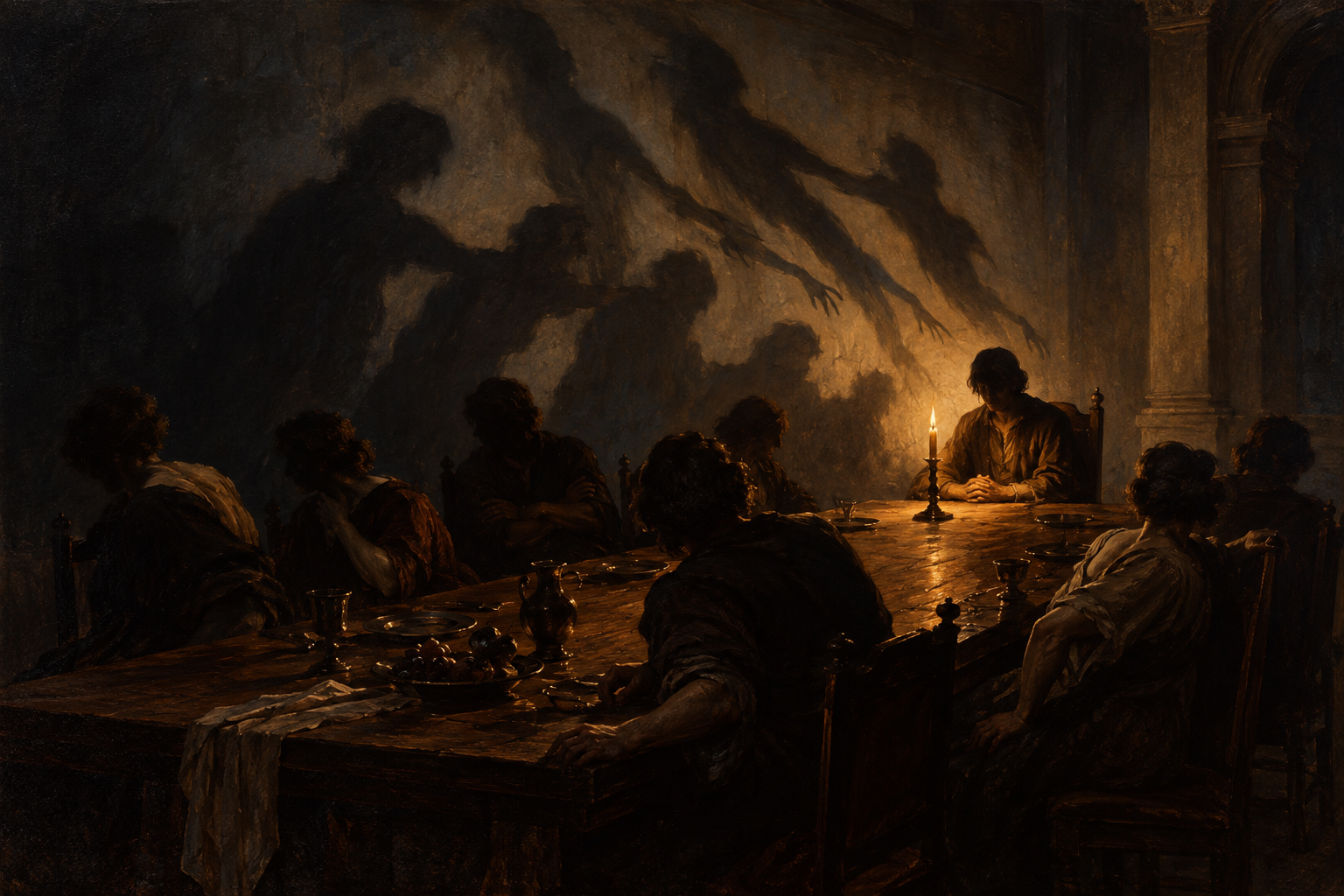
The Hidden Forces Within: Balancing Your Anima and Animus

The Mystery in Every Human Soul
There are parts of you that don’t have names, but they move your thoughts, shape your desires, and whisper things into your soul that logic cannot explain. Sometimes you react too strongly. Other times, you pull away from love without knowing why. There’s a hidden energy in you, feminine or masculine, that has never fully been seen, not by others and maybe not even by yourself.
Carl Jung called these inner forces the Anima and Animus. They are the feminine soul within the man and the masculine spirit within the woman. Most people ignore them, but when you do, they don’t disappear. They take over your dreams, your relationships, your sense of peace.
This is not about gender. It’s about wholeness. It’s about understanding why you feel torn inside and how to begin restoring the harmony between your inner feminine and masculine. By the end, you’ll not only understand Jung’s concepts, you’ll see yourself more clearly and perhaps finally come home to who you truly are.
What Are the Anima and Animus?
There is a mystery in every human soul. A quiet presence living within you just beneath awareness. Not your thoughts, not your memories, something older, something inherited. Carl Jung believed that every man carries within him a hidden feminine soul and every woman carries a hidden masculine spirit. He called them the Anima and the Animus. These are not just psychological concepts. They are living energies within the unconscious.
- The Anima is the soul image of woman inside the male psyche. It is emotion, intuition, tenderness, creativity, and chaos. She is the inner presence who brings softness and depth to the masculine mind. But when repressed, she becomes a force of confusion, making the man overly sensitive, reactive, or romantically obsessed.
- The Animus is the spirit image of man inside the female psyche. He is will, logic, structure, power, and clarity. He helps the woman make decisions, set boundaries, speak her truth. But when distorted or unbalanced, he becomes rigid, cold, or critical. A voice that tells her to shut down her feelings and harden her heart.
These two inner forces are archetypes, universal patterns that live in all of us, shaped by generations of culture, mythology, and personal experience. From childhood, we begin forming these inner images. A boy watches his mother—not just her actions but the emotional atmosphere she carries. Likewise, a girl watches her father, his presence or his absence, his strength or his instability.
But the Anima and Animus are not just shaped by our parents. They are also formed by culture. Stories, songs, the roles we are told to play, what it means to be a man or a woman are absorbed unconsciously. Jung believed that unless we confront these inner figures, they will take over our lives. We don’t just love people. We often fall in love with our own projection of the Anima or Animus, that idealized inner image we’ve carried for years.
How Anima and Animus Sabotage Relationships
Sometimes the person we fall in love with isn’t real. Not because they’re lying to us, but because we’re seeing them through a lens made of longing, memory, and unhealed parts of ourselves. Carl Jung warned that when the Anima and Animus are unconscious, they don’t disappear. They project themselves onto the people we desire the most.
You don’t just meet someone. You meet the story inside you, the ideal lover, the missing part, the rescuer, the mystery, and you pour that story onto someone else believing it’s love when it’s actually a reflection of your inner soul trying to speak. This is how the Anima and Animus quietly sabotage our relationships.
A man who hasn’t integrated his Anima may become obsessed with a woman not because of who she is but because she embodies the image he’s been carrying since childhood. She becomes a fantasy—ethereal, mystical, emotionally overwhelming. And when she fails to live up to that ideal because no real human can, he swings between worship and resentment, desire and disappointment. In that cycle, he isn’t loving her. He’s loving the version of himself that he never allowed to live.
Likewise, a woman dominated by her Animus may struggle to truly connect. She may see vulnerability as weakness. She might be attracted to men who are emotionally distant because they confirm her belief that closeness is dangerous. Her inner masculine becomes a harsh inner critic, whispering that she must stay strong, independent, unshakable, even if it means being alone.
“You are not choosing them consciously. Your Anima or Animus is doing the choosing.”
Jung called this a kind of spiritual blindness. Not seeing others as they truly are, only seeing who we need them to be. True love can only exist after projection ends. Only when we reclaim what we projected and begin to love the real person in front of us. But to do that, we must first turn inward.
Signs You Are Dominated by the Anima or Animus
Most people live their entire lives unaware of the unconscious voices steering their decisions. They think their reactions are just personality. Their obsessions are passion. Their emotional spirals are justified. But Jung understood that behind many of our strongest behaviors is a silent puppeteer.
So, how do you know if you’re being dominated by these forces?
Signs of the Anima (The Inner Feminine in Men)
When the Anima is unconscious or distorted, a man may:
- Fall in love too quickly, then crash: He doesn’t fall for a person; he falls for a dream.
- Experience uncontrollable mood swings: Deep melancholy, sudden euphoria, or irrational fear without knowing where it comes from.
- Idealize women or resent them: Placing them on a pedestal, then blaming them for not staying there.
- Be overly dependent on validation: Fearing abandonment deeply or needing constant reassurance.
- Dream of mysterious women or water: Oceans, darkness, or being pulled underwater often represent the unconscious feminine calling for integration.
Signs of the Animus (The Inner Masculine in Women)
When the Animus is unbalanced, a woman may:
- Struggle to trust: Becoming emotionally guarded because the inner Animus tells her vulnerability is unsafe.
- Feel pressure to be in control: A harsh inner voice says she must never be weak; the Animus becomes a tyrant instead of a guide.
- Argue or debate internally: Experiencing a “talking crowd” of voices, overthinking every decision, and doubting her instincts.
- Dismiss her own emotions: Rationalizing everything and replacing feeling with logic.
- Dream of cold structures: Tall towers, broken bridges, or machinery may point to the overactive or rigid masculine principle.
What makes all of this so difficult to notice is that it often feels normal. But it’s not about blaming these energies. They’re not your enemy. They’re fragments of you, waiting to come home.
How to Integrate the Anima and Animus
Integration does not begin with force. It begins with noticing. For many people, these forces feel distant, like abstract concepts. But once you understand they’re living presences within your soul, you realize that integration is not about mastering something. It’s about meeting someone inside you that you’ve ignored for years.
To integrate is to recognize them as parts of your inner family, not to suppress, avoid, or romanticize them, but to listen. Here is how you begin:
1. Inner Dialogue (Active Imagination)
Jung often spoke of Active Imagination, a practice where you engage with these inner figures directly. In a quiet space, close your eyes. Picture the Anima or Animus. Don’t force their image; let them come naturally. Ask them questions. Let them answer. Let the conversation unfold like a dream. This is not fantasy. This is the language of the unconscious.
2. Observe Relationships as Mirrors
Every time you feel irrationally drawn to someone or deeply repelled, pause and ask, “What am I seeing in them that belongs to me?”
- If you’re a man, ask: “Is this woman reflecting my inner Anima, my emotional world, my intuition?”
- If you’re a woman, ask: “Is this man reflecting my inner Animus, my need for structure, strength, or protection?”
3. The Daily Practice of Balance
- For men: Begin honoring your emotions even when they don’t make sense. Create space for quiet, for softness, for mystery. Learn to listen without fixing.
- For women: Begin trusting your voice even when it feels confrontational. Speak your truth clearly. Make space for structure and logic. Let go of the belief that strength makes you unlovable.
4. Body Awareness
Notice how you carry yourself. When dominated by the Animus, you might have a tight jaw or rigid spine. When ruled by the Anima, perhaps slumped shoulders or trembling hands. Instead of fighting those sensations, stay with them. Breathe into them. Let the body become a map for your healing.
“The privilege of a lifetime is to become who you truly are. And to do that, you must welcome every part of you home.”
The Inner Marriage: Why Union Matters
We spend much of our lives searching outside ourselves for connection, for recognition, for wholeness. But Carl Jung gently turns our gaze inward. He tells us, “The real union you seek is not with another. It is with yourself.”
Jung called this process the Inner Marriage. It is the moment when the masculine and feminine energies within you stop fighting and begin listening to each other. It is when your will no longer overpowers your emotion, and your emotion no longer drowns your direction. It is when the voice that says “stay strong” finally sits beside the voice that says “I’m scared,” and they hold space for each other without shame.
This union creates something powerful: not perfection, but integration. You begin to feel whole even when alone. You begin to love not from need but from presence.
You stop running from your femininity or masculinity. You stop fearing your own softness or power. You realize they were never enemies. They were never meant to be at war. They were only waiting for you to listen. And in that moment of inner union, something opens. You begin to feel a quiet joy. Not happiness based on circumstances, but joy that comes from belonging to yourself.
A Quiet Invitation to Balance
There comes a moment when all the knowledge in the world is no longer enough. When words lose their weight. When concepts like Anima and Animus are no longer just theories, but become living presences that ask to be felt.
This moment doesn’t arrive with fireworks. It comes quietly in the stillness between thoughts. It is here in this soft silence that balance begins. Carl Jung never asked us to be perfect. He asked us to be whole.
So today, instead of trying to fix your emotions, feel them. Instead of controlling your reactions, observe them. Instead of searching for love outside, look gently within. Ask yourself:
- When was the last time I honored my softness without shame?
- When was the last time I stood in my strength without fear?
- When was the last time I allowed both voices inside me to speak?
Balance is not a destination. It is a relationship, a quiet evolving relationship between your inner masculine and inner feminine. You will not get it right every day. You will falter. But now you know these moments are not failures. They are invitations.
You don’t need a grand ritual. You don’t need to get it right all at once. All you need is presence and willingness. Because once you begin listening to these parts within you, truly listening, you become something rare. A human being in harmony with their own soul. Not because you’ve silenced your contradictions, but because you’ve made room for them. And that quiet room inside you, the one where both the Anima and Animus are welcome, is the beginning of your return to peace.
If this message spoke to something deep inside you, share in the comments what part spoke to you most. Have you noticed your inner masculine or feminine playing out in your life? Let this be more than a video. Let it be a beginning.