Why Shadow Work So Often Fails

If you are drawn to shadow work, it is usually because something in you has already failed to remain hidden. Not because you are unusually courageous. Not because you possess some rare psychological insight. More often, it begins when familiar patterns tighten their grip, when relational endings recur, when moral certainty hardens, or when irritation attaches itself to the same types of people with a persistence that feels almost deliberate. As if life were insisting on a lesson you have managed, for a long time, not to hear.
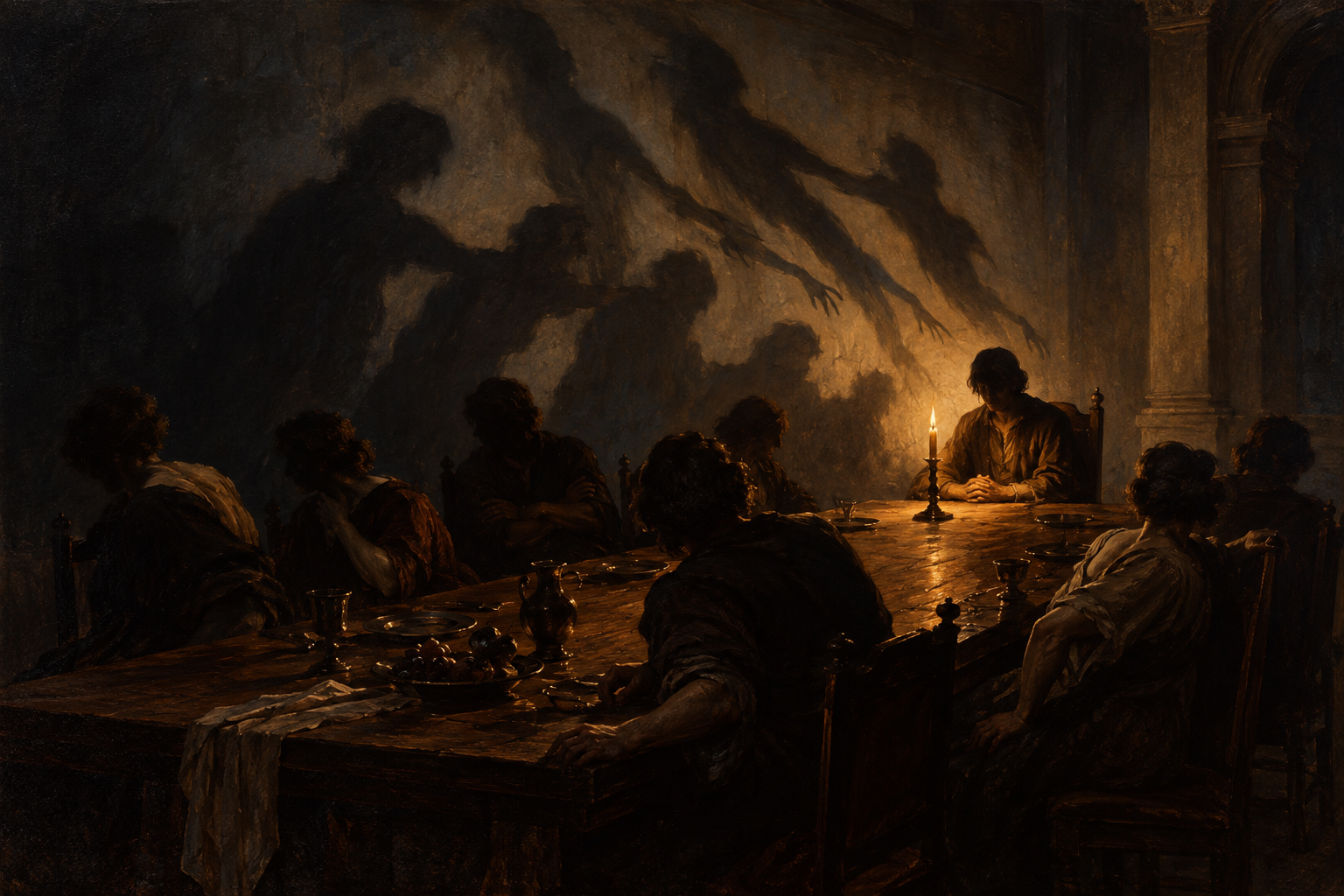
What you think of as your personality may already be a structure built to defend against what you have refused to know. And the shadow (whether you accept the term or not) is not waiting to be discovered. It is already active. It has been influencing choices, reactions, and judgments quietly, without consultation. Shadow work does not awaken a sleeping force. It brings you into contact with something that has been governing you in the background for years.
The Ego as the Agent of “Integration”
Most attempts at shadow work falter for a familiar reason: the ego imagines itself as the agent of integration. The moment the thought appears: “I am going to integrate my shadow”; a subtle inflation is already underway. The ego steps into the role of overseer, imagining the psyche as something it can supervise, regulate, and improve.
It begins to decide which elements may be admitted into consciousness and which may remain safely symbolic, acknowledged but contained. This resembles analysis only on the surface. Beneath it, something else is happening. A moral staging. A performance designed to preserve authority.
In more contemporary language this is often described as spiritual bypassing, but the phenomenon itself is older and more mundane. The ego learns the language of depth psychology and uses it defensively. It becomes fluent in speaking about darkness while remaining largely untouched by it.
Confession becomes selective. Flaws are named so long as they do not threaten the central self-image. Humility appears, but it is carefully shaped. Authority is not relinquished; it is reorganized.
Why Sincerity Is Not the Problem
The difficulty here is not dishonesty. Many people are sincere. The problem is structural. The ego’s wish to improve itself, to become clearer, more ethical, more resolved, is precisely what obstructs contact with the shadow.
The ego seeks progress and relief. The shadow interferes with both. It does not cooperate with the project of self-betterment. It interrupts it.
Jung was explicit on this point, even if it is often softened in later interpretations. The shadow is not a collection of “dark traits” waiting to be welcomed home. It consists of those aspects of the personality that could not be reconciled with the demands of adaptation.
Some were rejected because they violated explicit moral standards. Others because they were inconvenient, disruptive, or simply too ambitious; qualities that threatened belonging and survival. What matters is not their moral classification, but the fact of their exclusion.
Persona, Repression, and Moral Cost
The shadow takes shape alongside the persona. The more rigid, admirable, or morally polished the persona becomes, the more psychic energy accumulates behind what it excludes.
This is why people who appear especially principled often carry shadows that are coarse, resentful, or primitive. Not because their values are false, but because those values have been maintained at a psychic cost that remains unacknowledged.
The psyche does not dispose of what it rejects. It represses it. And what is repressed does not remain inert. It presses for expression in indirect ways, through tone, timing, or emotional excess.
It appears as sarcasm that feels justified, as contempt that arrives uninvited, as moral outrage that carries a peculiar charge. Often it adopts the language of righteousness. The more certain the judgment feels, the more carefully it deserves examination.
It is a common error to assume that recognizing these patterns places the individual at a distance from them. It does not. Awareness, by itself, does not dissolve the shadow’s influence. In some cases, it sharpens it.
Possession Versus Relationship
There is an important distinction here that is often missed: the difference between being in relationship to the shadow and being possessed by it.
Possession does not usually announce itself as chaos or loss of control. More often it appears as certainty. As conviction. As the sense of standing on unassailable moral ground. The individual feels clear, justified, even purified by their position. Doubt disappears. Complexity collapses.
Consider the individual who prides themselves on being a “healer” or a “helper.” Their persona is built on selflessness. Consequently, their shadow becomes a repository for power-seeking and deep resentment.
They do not experience their demands for gratitude as a shadow; they experience them as a rightful expectation of the “good person.” They are not simply being difficult; they are possessed by the archetype of the martyr, and every action is authorized by their perceived sacrifice.
Jungians describe the same split in the wounded healer archetype, where the helper keeps the healing role and leaves the wound with everyone else.
This is one reason articulate, reflective, morally serious people are especially vulnerable. They can justify almost anything without noticing they are doing so. They experience their reactions as principled rather than compelled.
The shadow does not feel like something they have. It feels like something they are authorized by.
Psychological Literacy as Disguise
When the shadow is constellated in this way, it does not feel dark. It feels necessary. It feels earned. The person experiences themselves as finally aligned, with truth, with justice, with reality itself.
This is not integration. It is identification. And identification is precisely what keeps the shadow unconscious.
Knowing about the shadow does not protect against possession. Psychological literacy can become one of its most effective disguises. Language replaces reflection. Explanation replaces encounter. The individual speaks fluently about projections, complexes, and defenses while remaining firmly inside one.
This is where the shadow becomes most dangerous; not because it erupts, but because it stabilizes. It organizes the personality around a position that feels unquestionable.
From there, relationships narrow. Curiosity diminishes. The world is sorted cleanly into what confirms the position and what threatens it. At that point, the shadow is no longer something disowned. It is something lived through, without being recognized as such.
Why Most Shadow Work Remains Superficial
This is also why shadow work that focuses on identifying traits already known to be questionable tends to remain superficial. The shadow is not what you recognize as problematic. It is what you are convinced does not belong to you at all. Or worse, what you believe entitles you to your position.
Direct access is limited. This is not a failure of method; it is a condition of psychic structure. The ego cannot simply turn around and look at what it has disowned or identified with.
Introspection alone tends to produce a softened version: a manageable image that reassures rather than confronts. The psyche is subtler than that.
Projection as the Primary Entry Point
Contact usually comes indirectly. Projection is the most common route, though not the only one.
What stirs you excessively in others, whether aversion or fascination, deserves attention. Hatred that feels righteous. Admiration that borders on fixation. Outrage that leaves you strangely energized.
Take, for instance, the intense, recurring irritation one might feel toward a colleague who is perceived as “lazy” or “irresponsible.” The observer’s persona is likely built on hyper-productivity and a relentless work ethic.
The shadow is not merely “laziness,” but the repressed capacity to rest or the disowned desire to be taken care of. The hatred for the colleague is a defense against the internal pressure of the observer’s own exhaustion.
The external person becomes the container for the life the observer has forbidden themselves to live.
Repetition, Adaptation, and Justification
The psyche makes use of other people as surfaces onto which disowned material can be cast. What cannot be tolerated internally is encountered as if it were external.
One might observe the reactions that do not subside. Not the momentary offense, but the response that lingers. The argument rehearsed long after the encounter has ended. The judgment that feels strangely enlivening.
These are not verdicts. They are signals.
As attention turns in this direction, another layer of difficulty often emerges. Many shadows did not form simply because certain traits were unacceptable. They formed around moments where the psyche had to act against itself in order to survive.
These moments do not always register as trauma. They register as necessity.
What is disowned is often something that once felt justified. Cruelty that protected. Emotional distance that preserved safety. Aggression that secured position. Over time, these adaptations harden.
This is why the shadow so often contains a powerful sense of justification. It once kept the psyche intact.
Integration, Containment, and Risk
If this work is undertaken without an analyst, its scope is narrower than people imagine, and its demands are greater. Explanation, forgiveness, and transformation are tempting, but they often serve the ego’s wish for resolution.
The priority is sustained attention. Reactions are allowed to register without immediate correction. The story that forms around them is neither improved nor condemned.
Integration is quieter, and less gratifying. It involves holding a tension that does not resolve quickly. It requires resisting both repression and enactment.
The shadow does not need to be lived out. It needs to be entered into relationship.
Persona Collapse Is Not Integration
The persona can collapse from overuse, from depletion, or from chronic compromise. When that happens, what appears is not necessarily the shadow, but a loss of containment.
Without structure, the shadow does not integrate; it floods.
The persona is not a lie to be discarded. It is a function. Integration does not require the collapse of form. It requires a relationship between form and what it excludes.
There are moments when this work should not be done alone. Jung was clear about this, even if later interpretations have been less cautious.
Closing: What Shadow Work Actually Removes
The shadow is not an enemy. But it is not an ally either. It does not seek your improvement. It seeks recognition.
Recognition does not mean endorsement. It means acknowledging influence.
If you engage this work with seriousness, the result is unlikely to be lightness or redemption. More often it brings sobriety. Certainties lose their shine. Virtues appear less impressive.
That awareness does not confer wisdom.
It removes something else.
And once innocence is gone, you are no longer free to pretend you do not know what you already sense.