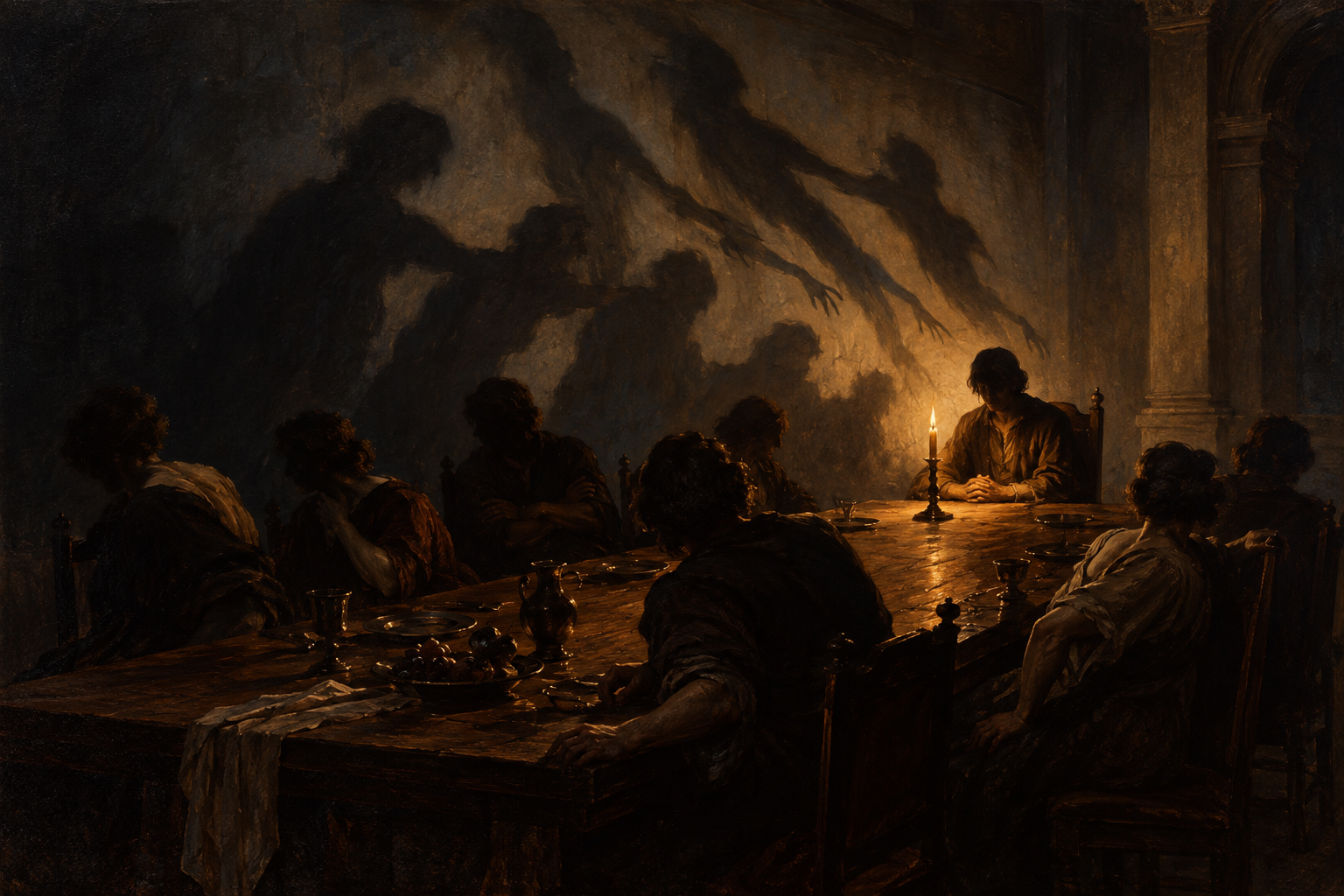
The Shadow on the Screen: What Pornography Reveals About Our Soul

The Hidden Classroom
Every single day, more than 100 million people across the world type the same search into a screen. It has become so common that we barely pause to question it. Pornography is no longer hidden in the shadows of society. It is one of the largest industries on the planet, generating more profit than Hollywood films or professional sports combined.
Carl Jung never lived in the age of the internet. But he understood something timeless. When the human psyche represses desire, when entire cultures bury their instincts under shame and silence, those instincts do not disappear. They return through the back door, wearing masks. Porn is one of those masks, a mirror of our unspoken hunger, a reflection of the shadow we do not want to name.
This is not about judgment. It is not about morality. It is about understanding. Because when you see clearly how the unconscious moves within you, the grip of shame begins to loosen. And when shame loosens, something else becomes possible. A different relationship to your own desire. By the end of this journey, you will have three very practical gifts. First, you will understand the psychological reflex that is triggered each time you reach for a screen. Second, you will learn how to reduce the obsessive pull and regain a sense of control over your own choices. And third, you will discover how to turn raw sexual energy into intimacy that is deeper, more real, and more human.
“We do not become enlightened by imagining figures of light, but by making the darkness conscious.” — Carl Jung
Porn is not the end of intimacy, but a signal, a signpost pointing toward the hidden life of the soul. If you are willing to look at it honestly, you will not only understand your own shadow but also glimpse the collective shadow of our world. And in that recognition lies the first step toward wholeness.
The Substitute Teacher of Desire
For millions of young people around the world, pornography is not simply entertainment. It has quietly become their first classroom. In many cultures, conversations about intimacy are absent or too awkward to sustain. What fills the silence is not honest guidance but images that teach through repetition. The screen becomes the substitute teacher of desire.
When Carl Jung described libido, he never limited it to sex alone. He called it the raw energy of life itself. The fuel that pushes us toward love, creation, connection, even spirituality. But when this energy is not guided, when there is no wise container to hold it, it searches for the quickest release. Porn becomes the shortest path, a direct highway for libido to travel without resistance. And the mind begins to mistake this highway for the entire landscape of intimacy.
The psychological mechanism is subtle but powerful. Each time a new image appears, dopamine surges, promising pleasure at almost no cost. The body learns to crave novelty, not closeness. The nervous system adapts by expecting constant stimulation, yet finds little satisfaction in it. Slowly, the natural rhythm between emotion and body is torn apart.
Imagine a 20-year-old young man whose education about sex has come almost entirely from the internet. He has learned what excitement looks like, but not what tenderness feels like. He knows the mechanics of performance but not the art of listening to another person’s breath or respecting the boundary of their silence. When he steps into a real relationship, he carries with him not only curiosity but also distorted scripts. He wonders why reality feels so different from the fantasy he has practiced for years.
This is not a story of failure or guilt. It is the natural result of learning in the absence of guidance. When society leaves its children without honest conversations, the shadow rushes in to educate them instead. Porn becomes a silent mentor, whispering lessons that no one stops to question. And yet, every lesson leaves behind a deeper hunger for something missing.
Jung would ask us to pause and reflect. What are we truly learning in those moments of escape? Are we learning how to honor the body or how to consume it? Are we learning intimacy or the art of detachment? The question is not whether porn is good or bad, but what hidden story it is teaching about the value of human beings. If you look closely, you might see that the screen is not only showing desire. It is shaping the way desire is remembered inside you.
The Collective Shadow
When we step back from the individual and look at the world, the paradox becomes undeniable. Across cultures, societies speak in the language of morality. Publicly, leaders, institutions, and traditions insist that sex should remain sacred, private, or restrained. Yet privately, the very same societies sustain one of the most profitable industries in history. This contradiction is not a minor detail. It is the shadow of the collective itself.
Carl Jung taught that what is repressed on a cultural level does not vanish. It sinks into the collective unconscious and finds other ways to surface. Pornography is one of those surfaces. It becomes the pressure valve for what cannot be spoken in public but thrives in secret. And in this way it reveals the hidden gap between what we claim to value and what we actually consume.
Look at the data and the story becomes sharper. In countries where religion strongly condemns pornography, the rates of online searches remain among the highest. In places where laws ban explicit material, people still find ways to access it, often driving the demand even higher. Meanwhile, in nations with more permissive attitudes, porn becomes less a forbidden fruit and more a normalized form of entertainment. Everywhere the pattern repeats. Denial in the light, indulgence in the dark.
This is not about hypocrisy in the simple sense. It is about the difficulty of holding desire with honesty. When a culture splits itself between morality and consumption, it creates a collective double life. The conscious voice says one thing while the unconscious body does another. The result is tension, shame, and a cycle of silence that never breaks.
Jung would remind us that what a society refuses to name will always return. It returns through art, through symbols, through hidden behaviors that carry more weight than words. Pornography is not simply a product of technology. It is an ancient energy clothed in modern pixels. It is the voice of our instinct speaking back to us after being silenced too long. To dismiss it as just entertainment is to miss the depth of what it exposes. So the question is not whether societies should permit or forbid pornography. The deeper question is what unacknowledged hunger is being fed here? What longing is so strong that it survives laws, taboos, and public shame? If we can begin to name that hunger honestly, perhaps we can move closer to healing it.
The Archetypes Behind the Screen
Why is pornography so gripping, not just as a habit, but as an image that stays in the psyche? Jung would point us toward the archetypes, the universal patterns that live inside the collective unconscious. These ancient symbols do not belong to one culture. They belong to all of humanity, and on the screen they appear in distorted but recognizable forms. This is why pornography feels at once familiar and shocking, ordinary and forbidden.
- The Lover: At its essence, the lover archetype seeks union, tenderness, the longing to dissolve into another being. In its pure form, it is about beauty, affection, and the sacred mystery of connection. But in pornography, this archetype is fragmented. The lover is reduced to an object to be consumed, not a soul to be honored.
- The Trickster: This archetype thrives on deception, disguise, and breaking boundaries. It is the spirit of mischief, the thrill of getting away with something that feels forbidden. On the screen, the trickster appears through role-play, taboo scenarios, and the overturning of social norms. It gives the viewer a fleeting sense of power, a taste of freedom from rules that normally confine them.
- The Predator: This archetype represents domination, control, and the hunger to possess. It is not always violent, but it carries the undertone of power over another. In pornography, this archetype often hides in plain sight, normalized through repetition. And the more familiar it becomes, the less we recognize it as a distortion.
These three archetypes—the lover, the trickster, the predator—explain why pornography feels magnetic. They tap into the deepest layers of human imagination into scripts that existed long before the internet. When we watch, we are not just consuming images. We are touching ancient stories that have lived in us for centuries. The danger lies not in the archetypes themselves, but in their imbalance. Without awareness, they are stripped of their depth and turned into patterns of addiction.
It is important to pause here and make one distinction clear. This is not about demonizing performers or judging those who participate. Archetypes are larger than any individual. They are forces that shape all of us. The performer is not the problem but the projection of our own collective shadow. To see pornography only as an industry is to miss the symbolic power it reveals about the human soul.
The Cost of Novelty
Every choice we make in the psyche leaves a trace in the body. Porn isn’t just a habit. It reshapes your brain and body. At first, the novelty creates a sharp surge of dopamine, a rush that feels like aliveness itself. But with repetition, the same image no longer satisfies. The system begins to crave more intensity, more variety, more shock.
This cycle is familiar to anyone who has battled addiction. The promise of pleasure leads to a quick reward. But the brain adapts by raising the threshold. Soon, what once seemed thrilling becomes ordinary. The viewer climbs higher and higher. Yet, the sense of fulfillment grows weaker. The body learns to expect fireworks, but the soul feels emptier.
In real relationships, the cost becomes visible. A partner may seem less exciting compared to the endless novelty of the screen. Moments of genuine intimacy feel too slow, too quiet, too vulnerable. Instead of staying present with another’s body, the mind drifts back to the curated images of fantasy. The result is distance, confusion, and often a quiet grief on both sides.
Consider a couple who struggles to connect after years together. One partner turns to pornography for stimulation, believing it is harmless. But over time, the other senses the gap, not only in the bedroom, but in the everyday gestures of affection. Touch feels mechanical. Words feel scripted. Eye contact becomes rare. They both wonder why closeness feels so hard when desire seems so abundant online.
Jung would not condemn this couple. He would see it as a symptom of a deeper split between body and psyche. Pornography provides intensity without intimacy, stimulation without presence. The nervous system becomes conditioned to chase the image while the heart longs for connection it cannot find there. The shadow takes what is sacred and reduces it to performance. It is here that awareness becomes crucial not to induce shame but to name the cost clearly. Each hour on the screen is not only a moment lost. It is a small shift in how the nervous system responds to love itself. When we numb ourselves to vulnerability, we lose the language of tenderness. And tenderness is the true home of desire.
From Suppression to Transformation: A 4-Step Protocol
Jung believed that the shadow cannot be destroyed. It is not something to cut away but something to bring into awareness. Pornography then is not the enemy. It is a signal, a mirror showing us where energy longs to flow but has been trapped in repetition. The task is not suppression but transformation.
- Naming: Instead of hiding, write down the patterns that trigger you. Notice what emotions are present beneath the surface. Is it loneliness? Boredom, fear of rejection? By giving language to what feels unspeakable, you lift it from the unconscious into the light of consciousness. Naming breaks the spell of secrecy.
- Containing: This is not about sudden self-denial, which often leads to backlash. It is about creating boundaries of time and space, recognizing when and where the urge appears. Some people use the practice of urge surfing, learning to sit with the craving as a passing wave rather than obeying it immediately. Containment means you no longer act automatically. You begin to choose.
- Transmuting: Jung insisted that libido is creative energy, not merely sexual. The same intensity that drives the urge can be redirected. Try music, movement, writing, painting, or even exercise at the very moment the desire peaks. Each act of transmutation teaches the psyche that energy can expand rather than collapse.
- Relating: Intimacy is learned slowly through presence, breath, and permission. Practice describing sensations in your body with a partner, even without sexual contact. Look into the eyes. Sync with the rhythm of breathing, ask and grant consent. These simple gestures rebuild the nervous system’s trust in closeness.
Jung once wrote that we do not heal by banishing darkness, but by making it conscious. This four-step protocol is a way of practicing that truth in daily life. It allows you to see desire not as a curse, but as raw material waiting for integration. The goal is not purity, but wholeness. Every shadow faced becomes a doorway to a deeper self.
Restoring the Sacred
For Jung, libido was never only about sex. It was the very energy of life. The current that moves through love, creativity, and spirit. When that current is confined only to the screen, it shrinks into repetition. But when it is honored as sacred energy, it becomes a path toward meaning. This is where sexuality meets spirituality.
Across history, many cultures understood this truth. In India, tantric rituals treated intimacy as a doorway to the divine. In ancient Greece, eros was seen not as sin, but as a bridge to beauty and wisdom. Even in Christian mysticism, the language of longing was often used to describe the soul’s union with God. The body was never meant to be separate from spirit.
Our modern world has largely forgotten this. Sex has been commodified, stripped of its mystery, turned into a product to be consumed. Pornography is the clearest symptom of this loss. It offers stimulation without ritual, intensity without reverence. And yet the hunger it reveals is at its root a hunger for the sacred.
What might it look like to restore the sacred dimension of intimacy today? It does not require monasteries or ancient temples. It begins with small rituals woven into daily life. 5 minutes of looking into your partner’s eyes without distraction. Five breaths taken together before a touch, a kiss, or an embrace. These gestures may seem simple, but they are revolutionary. They reteach the nervous system to slow down, to taste presence instead of chasing novelty. They remind the body that intimacy is not performance but communion. In that communion, shame begins to dissolve. And what returns is the sense that desire is holy.
A New Intimacy Contract
The future of intimacy may follow two paths. One is the path of fragmentation where technology continues to supply endless novelty and we become more isolated. The other is the path of renewal where individuals reclaim sex as a ritual of connection. The choice belongs to us both personally and collectively.
Porn has shown us our shadow. Now we must decide whether to keep hiding or to integrate. Imagine a couple who creates a small evening ritual. They put away their phones, sit in silence, breathe together, and allow touch to emerge slowly. At first, it feels unfamiliar, even uncomfortable. But with practice, they find themselves less dependent on fantasy and more nourished by presence. They realize that intimacy at its core is not about more stimulation. It is about deeper connection. Jung would call this individuation in practice—the journey of becoming whole. To see libido not as something to suppress or exploit but as energy to be integrated into the fullness of life.
This is the new intimacy contract our world desperately needs. Not contracts of performance but of authenticity. A covenant where body, soul, and spirit finally meet.
Pornography is not just an industry. It’s a mirror. It reflects the hidden parts of our collective soul. The desires we fear to speak. Jung reminds us what we repress will always return. But when we name it, we begin to heal. Your step forward is simple. Name it, hold it, redirect it, and bring it into real connection. This is not about losing something. It’s about reclaiming the power to choose intimacy, creativity, and wholeness.
So what can you do here and now? Begin with one small act each day. Name the feelings that drive you to escape into the screen. Contain the urge without judgment. Redirect even a fraction of that energy into creativity, movement, or presence with someone you trust. And above all, relearn the art of relating through touch, breath, and honest words.
Try this for 7 days. Each night before sleep, ask yourself three questions. What desire visited me today? Did I honor it or did I hide from it? And how might I bring it into connection rather than isolation tomorrow? You may be surprised by the clarity that emerges. Pornography will not vanish from the world, but your relationship to it can change. It can shift from being a source of shame to being a signpost, pointing you toward the intimacy, creativity, and wholeness you truly seek. In facing this mirror, you are not losing anything. You are reclaiming your own power to choose.