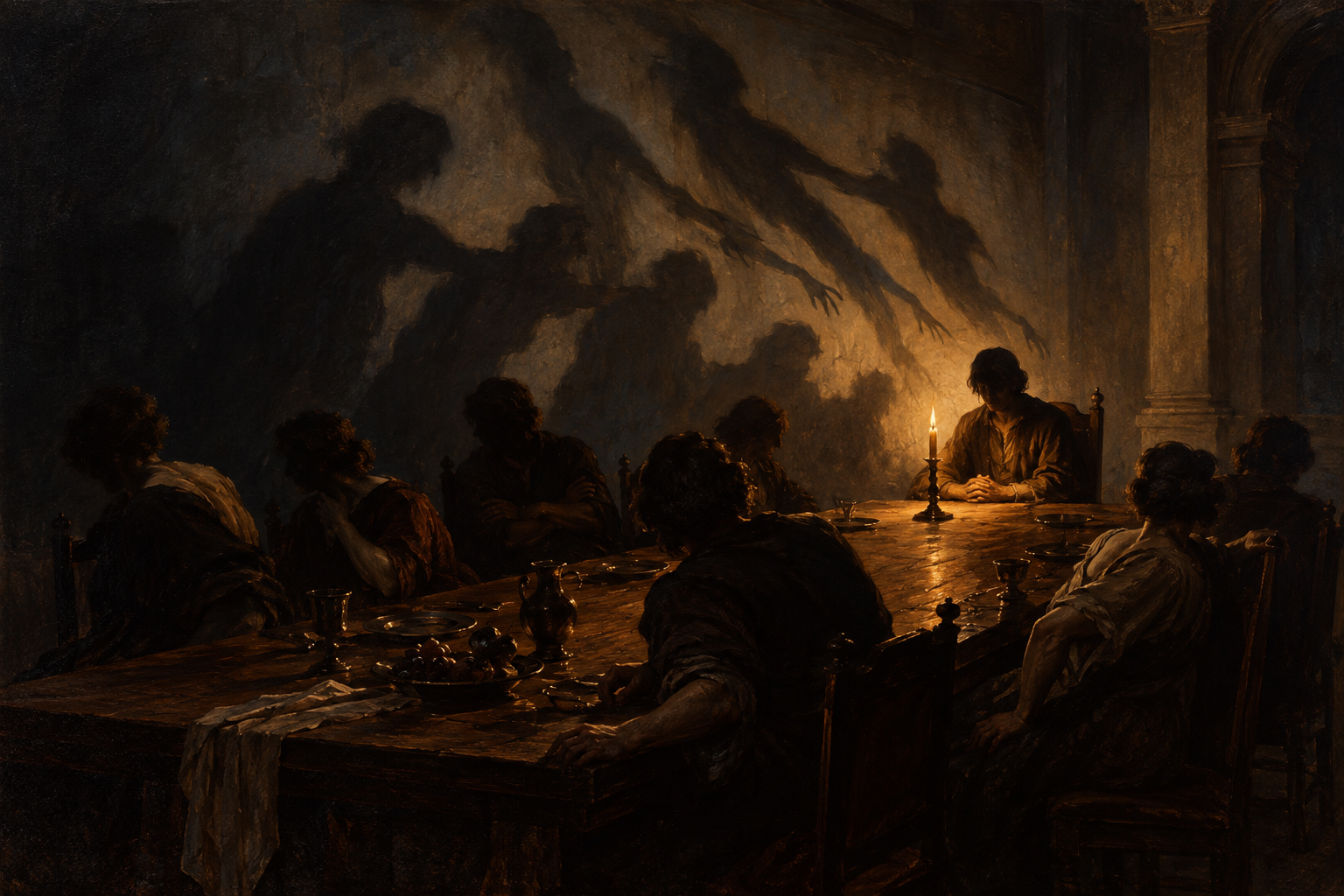
The Shadow of Self-Sabotage: Why You Ruin the Things You Want The Most

The Resistance to Healing
Have you ever asked yourself, “Why do I keep ruining the very things I say I want? Why do I push people away when all I long for is closeness? Why do I procrastinate healing when I know the pain is killing me? Why does a part of me seem so terrified of peace?”
You may not say it out loud, but you’ve probably felt it. Deep down, something inside you resists the very healing you desperately crave. And that resistance, it isn’t random. It’s not weakness. It’s not stupidity. It’s the voice of something old, buried, frightened, and hidden. Carl Jung called this the Shadow. And understanding it may be the key to everything.
We like to think of healing as a straight line, a clear decision followed by action and results. But for most people, it’s more like a spiral, a circle of hope, avoidance, attempts, failure, and guilt. You take one step forward, then two steps back. And no matter how badly you want change, something inside keeps sabotaging your progress.
Sabotage From Your “Survival Self”
Let’s pause right here and say the hard truth. Wanting to heal isn’t the same as being ready to heal. And even when you’re ready, your unconscious might not be because the most dangerous wounds are the ones that became part of your identity.
You see, somewhere along the way, your pain became familiar. It became home. Maybe it was the only way you knew how to survive. Maybe it protected you. Maybe it got you attention. Or maybe it helped you not feel something worse. So now even as you try to grow beyond it, a deeper part of you whispers, “Don’t let go.” This is not sabotage from your enemy. This is sabotage from your survival self.
Jung believed that each of us carries not only the conscious self, the one we show the world, but also a hidden counterpart. The parts of us we rejected, denied, or never made sense of. That counterpart is the shadow. And until we face it, it runs the show behind the curtain. Healing then is not about chasing light. It’s about turning toward the darkness you tried to forget.
Why Peace Feels Dangerous
The paradox is that you can pray for transformation. Read all the self-help books. Go to therapy. But if your nervous system still believes that healing is dangerous, it will fight to protect the old pain. Because pain, at least, is predictable. You can tell yourself, “I deserve peace.” But if your inner child only ever knew chaos, peace feels threatening. Silence feels suspicious. Stillness feels unsafe.
This is why so many people sabotage relationships just as they start to feel safe. It’s why they ghost people who care about them. It’s why they relapse the moment things improve. It’s why they choose chaos when peace becomes unbearable. Because the shadow self doesn’t want healing. It wants control. It wants to protect you from disappointment. And healing requires surrender.
Let me give you a visual. Imagine you’re standing at the edge of a river. On the other side is your healed self, confident, grounded, whole. But to get there, you have to cross the water. And in your arms, you’re carrying a box. It’s full of every story you told yourself to survive. Every fear you learned to obey. Every identity you clung to. The box is heavy, but it feels like part of you. You know deep down that if you want to cross, you’ll have to set it down. But the idea of putting it down feels like death.
That’s what self-sabotage is. It’s not laziness. It’s not failure. It’s grief. Grieving the loss of who you were so you can become who you’re meant to be.
“People will do anything, no matter how absurd, to avoid facing their own souls.” — Carl Jung
We’d rather lose love than face abandonment. We’d rather numb the pain than sit with our grief. We’d rather stay sick than feel how lonely healing can be. But what if that fear, what if that sabotage is the final defense of your wounded self, begging you to meet it with compassion instead of shame?
What the Shadow Really Is
Carl Jung believed that we are all more than what we show to the world. There’s the self we present, the version we polish, protect, and perform. The version we think will be accepted, loved, or at least tolerated. And then there’s everything else. The fears, the shame, the rage, the secrets, the parts we’ve disowned, the parts we were told were too much or not enough. Jung called this hidden side the shadow. The unconscious self we spend most of our lives trying to avoid.
And here’s the painful truth. The more you try to deny the shadow, the more control it gains over you. The shadow isn’t evil. It isn’t your enemy, but it does contain everything about you that you didn’t feel safe enough to feel. And so it becomes a closet filled with unlived emotions. Guilt, grief, jealousy, powerlessness, and it seeps through the cracks when you’re tired, stressed, or afraid.
Let’s imagine this. You’re a child. You cry too much and someone says you’re being dramatic. You’re excited and someone calls you annoying. You express anger and someone punishes you. Over time, you learn to suppress those traits. You tuck them away, not because they’re wrong, but because they weren’t welcome.
Now, fast forward to your adult life. You find yourself unable to express needs. You smile when you’re angry. You overachieve to avoid rejection. You say yes when your body screams no. And you have no idea why you keep repeating the same painful cycles. That’s your shadow in motion. You buried parts of yourself so long ago, you forgot where you left them. But they didn’t disappear. They just went underground.
“Until you make the unconscious conscious, it will direct your life and you will call it fate.” — Carl Jung
This explains why you keep dating people who hurt you. Why you chase success but feel empty. Why you sabotage every moment of peace with an instinct for chaos. It’s not fate. It’s a shadow program running beneath the surface. Healing begins when you stop asking “what’s wrong with me” and start asking “what hurt me so badly that I had to become someone else just to survive?”
The Masks of Sabotage
Self-sabotage rarely announces itself. It doesn’t come with flashing lights or sirens. It disguises itself as logic, as caution, as just being realistic. It looks like procrastination, avoidance, overthinking. It sounds like the voice in your head that says, “What if I fail?” Or worse, “What if I succeed and still feel nothing?”
Sabotage wears many masks:
- Perfectionism: When you’re so afraid of failure you never let yourself finish anything.
- People Pleasing: When you betray your needs to avoid rejection.
- Chronic Indecision: When your fear of choosing wrong keeps you frozen.
- Numbing: When you feel emotions coming up, but instead of allowing them to move through you, you numb them with food, television, alcohol, or endless productivity.
Here’s what makes it so difficult. Self-sabotage is self-protection. It’s your nervous system doing what it was trained to do: keep you alive by avoiding anything unfamiliar or potentially painful, even if that means sabotaging love, sabotaging success, sabotaging growth.
Carl Jung would say that every act of self-sabotage is your shadow trying to maintain control, not to hurt you, but to prevent you from reliving a pain your inner self believes it cannot survive again. That’s why logic doesn’t fix it. You can know better. You can journal. You can make lists. You can set goals. But if your subconscious still associates change with danger, your body will shut the door before you ever walk through it.
Rewriting the Story
If self-sabotage is the shadow’s way of staying safe, then healing is the art of rewriting the story that fear has told you for years. Carl Jung taught that every behavior has meaning, even the ones that hurt. So before we can transform, we must understand.
Think of your shadow like a child sitting in a dark corner repeating an old story. “I’m not good enough. If I trust, I’ll get hurt. Love always leaves. If I shine, they’ll reject me.” These stories weren’t chosen. They were absorbed.
So, how do we begin rewriting? First, we slow down. You cannot rewrite a story you’re too busy to hear. The next time you feel the urge to sabotage, to pull away, give up, or numb, pause. Ask yourself: What belief is trying to protect me right now?
That question alone can shift everything. Because suddenly the behavior isn’t the enemy, it’s a messenger. And the more you listen with compassion, the more your inner world starts to soften.
- Instead of “love always leaves,” you begin to whisper, “I’m learning to trust that not all connection leads to pain.”
- Instead of “I’m not enough,” you say, “I don’t have to earn love. I was born worthy of it.”
These aren’t just affirmations. They are new neural pathways. Fresh trails carved through your mind and body.
A Practice for Integration
I want to offer you a simple practice you can carry with you. A way to begin rebuilding trust within yourself and honoring the parts of you that once had to protect you by sabotaging your growth.
- Close your eyes, if you’re in a space where you can, and take a deep breath in through the nose. Hold. Out through the mouth. Let your shoulders fall. Let your jaw soften. Let your stomach unclench. Let yourself arrive.
- Now picture the version of you who sabotaged love. The version who pushed people away. The version who quit before trying. The version who procrastinated, numbed, lashed out, shut down. See that version clearly. Not to shame them, but to recognize them. What did they need? What were they afraid of? What pain were they carrying alone?
- Now, instead of blaming or correcting them, I want you to say either silently or out loud: “Thank you.”
Yes. Thank you. Thank you for trying to protect me. Thank you for doing what you knew. Thank you for carrying my pain when I didn’t know how to. You don’t have to fight anymore. You don’t have to be in control. I’ve got you now. And breathe.
What you’re doing in this moment is rewriting the contract between your conscious self and your shadow. You’re not denying the past. You’re not pretending it didn’t hurt. You’re simply saying the story can change now.
You Are Not the Pain
The version of you who sabotaged your healing wasn’t weak. That version was simply still waiting for someone, anyone, to choose them, to stay with them, to tell them, “You don’t have to protect me anymore. I am safe to grow now.” And now you’ve done that. You’ve begun something.
Don’t rush to fix everything. Healing doesn’t happen in a single moment. It happens in how you treat yourself. When you slip back into old patterns, it happens when you pause and say, “Wait, I recognize this. I’ve seen this before. I have another choice now.” That awareness, tiny as it may seem, is liberation.
Self-sabotage is not who you are. It is who you once had to become to survive. But you’re not surviving anymore. You’re living. And every breath you take with intention is a reminder that your past no longer owns you. You are not the pain you carry. You are the one strong enough to feel it, name it, and release it. You are the one who stops the cycle, who brings light to the places you once feared to look, who chooses softness over self-punishment. You are the one who heals.
If this message has stirred something in you, if a part of you feels like you’ve been seen, known, and held, then share this with someone else who needs it. Someone who may be stuck in the same pattern, waiting for someone to say, “I see you and you’re not alone.” Leave a comment sharing what part spoke to you the most. We’ll continue uncovering the shadow, integrating the self, and learning what it truly means to be whole. Until then, be gentle with yourself. You are doing holy work.